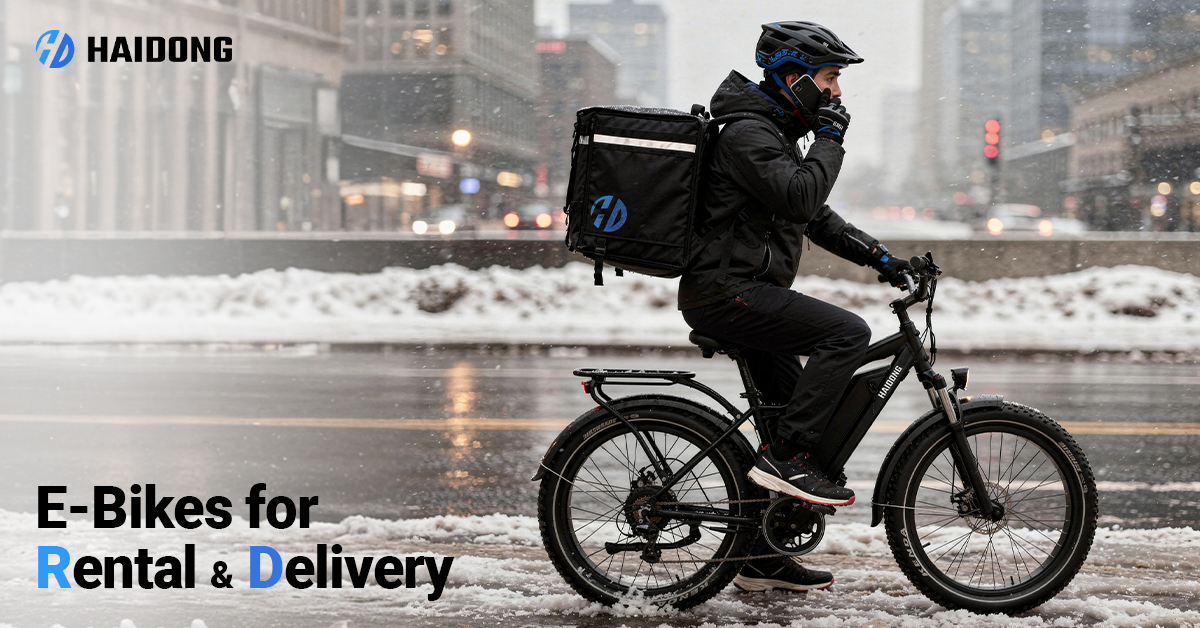
Food delivery has changed the way people move around cities. Restaurants, delivery platforms, courier companies, and local businesses all need a fast and reliable way to move food from one location to another.
For many businesses, a food delivery electric bike is becoming a practical alternative to cars, motorcycles, and traditional bicycles.
An electric bike is easier to operate in busy urban areas, costs less to run than a fuel-powered vehicle, and can be used for frequent short-distance deliveries. But choosing the right model is important, especially when you are buying multiple bikes for a delivery fleet.
A bike that works well for a private rider may not be suitable for commercial delivery.
What Is a Food Delivery Electric Bike?
A food delivery electric bike is an electric bicycle designed for frequent commercial use. Depending on the application, it can be equipped with a large rear rack, cargo box, reinforced frame, larger battery, or other equipment needed for delivery work.
These bikes are commonly used by restaurants, courier companies, rental operators, and other businesses that need reliable transportation for short-distance deliveries. Electric Bikes for Food Delivery and Rental
Unlike a standard commuter e-bike, a delivery bike needs to handle repeated starts and stops, additional cargo weight, long working hours, and regular use by different riders.
For businesses, the focus is not simply on how the bike looks. Reliability, battery capacity, load capacity, maintenance, and spare parts are often more important.
Why Are Electric Bikes Popular for Food Delivery?
Urban food delivery has several challenges. Riders may need to make dozens of stops during a working day, often in areas with heavy traffic and limited parking.
A food delivery electric bike can provide several advantages.
Lower Operating Costs
Compared with fuel-powered vehicles, electric bikes generally have lower energy and maintenance costs.
There is no gasoline or engine oil, and the mechanical structure is relatively simple. For a company operating dozens or hundreds of bikes, small savings per vehicle can become significant over time.
Easier Urban Delivery
Electric bikes are well suited to city streets and short-distance delivery routes.
They are smaller than cars and vans, making them easier to park and maneuver in congested areas. This can help riders spend less time looking for parking between orders.
Suitable for Short and Medium Delivery Routes
Most food delivery operations do not require a vehicle to travel hundreds of kilometers at highway speeds.
Instead, riders often make frequent trips within a defined service area. A properly configured electric bike can provide enough range for these routes while keeping the vehicle relatively compact.
Lower Fleet Entry Cost
For a new delivery business, purchasing a fleet of electric bikes can be less expensive than building a fleet of cars or motorcycles.
The exact cost depends on the motor, battery, cargo equipment, local regulations, and quantity ordered.
What Should You Look for in a Food Delivery Electric Bike?
Not every e-bike is suitable for commercial delivery. Before placing a bulk order, there are several important specifications to consider.
1. Battery Capacity and Real-World Range
Battery range is one of the first things a delivery company should consider.
A delivery rider may spend several hours on the road every day. If the battery is too small, the rider may need to stop and recharge during a shift.
For commercial applications, battery configurations such as 48V 15Ah or 48V 20Ah can be considered depending on the motor, rider weight, cargo load, terrain, and local regulations.
It is important to remember that advertised range is not the same as real-world range. Speed, hills, temperature, rider weight, tire pressure, and cargo can all affect battery consumption.
For larger fleets, businesses can also consider removable batteries so that a discharged battery can be replaced with a charged one.
2. Load Capacity
Food delivery does not always mean carrying only a small food bag.
Depending on the business, the bike may need to carry a delivery box, groceries, drinks, restaurant equipment, or other cargo.
A stronger frame and properly designed cargo rack can make a significant difference.
For example, Haidong’s C6 heavy-duty electric cargo bike is designed for commercial applications and has a listed payload capacity of up to 200 kg. Its reinforced frame and cargo-oriented design are intended for delivery and fleet use.
The correct load capacity should always be selected according to the intended market and local regulations.
3. Motor Performance
The motor should match the terrain and expected load.
For relatively flat urban areas, a 500W configuration may be sufficient depending on local regulations. For heavier cargo or hilly routes, businesses may consider a higher-power configuration where legally permitted.
Motor power is not the only factor.
Torque, controller settings, battery output, rider weight, tire size, and gearing also affect how the bike performs when carrying cargo.
This is why fleet buyers should discuss the complete configuration with the manufacturer instead of choosing a motor based only on the wattage number.
4. Braking System
Delivery riders make frequent stops.
A reliable braking system is therefore an important part of a commercial electric bike.
Hydraulic disc brakes can provide strong braking performance and good control, particularly when the bike is carrying additional cargo. The exact brake specification should be selected according to the vehicle weight, riding environment, and regulations in the target market.
5. Frame and Cargo Design
A normal commuter e-bike may not be designed for continuous commercial use.
For a delivery fleet, the frame and cargo mounting points should be strong enough for daily operation.
Depending on the application, businesses can choose:
- Rear cargo racks
- Large delivery boxes
- Front cargo racks
- Extended rear racks
- Reinforced frames
- Heavy-duty tires
- Integrated lighting
The right design depends on what the rider needs to carry and how the delivery operation works.
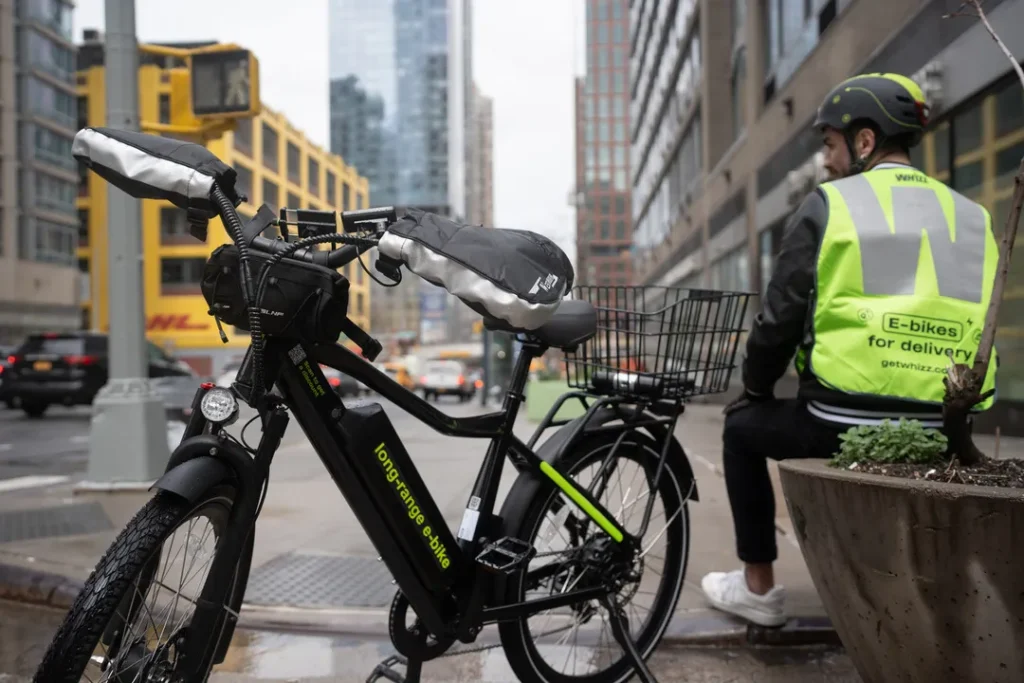
Food Delivery Electric Bike vs. Standard Commuter E-Bike
A standard commuter e-bike is mainly designed for personal transportation.
A commercial delivery bike has different priorities.
| Feature | Commuter E-bike | Delivery E-bike |
|---|---|---|
| Main purpose | Personal transportation | Commercial delivery |
| Daily use | Moderate | High |
| Cargo capacity | Limited | Higher |
| Battery | Standard | Larger options |
| Frame | Lightweight/standard | Reinforced options |
| Cargo rack | Optional | Usually important |
| Maintenance | Individual use | Fleet-oriented |
| Spare parts | Less critical | Very important |
This does not mean that every delivery business needs a heavy-duty cargo bike.
For restaurants and delivery companies carrying relatively small loads, a step-through commuter-style e-bike with a strong rear rack may be a better solution.
For larger loads, a dedicated Electric Cargo Bikes can make more sense.
Choosing Between a Commuter E-bike and Cargo E-bike
The best food delivery electric bike depends on the actual delivery operation.
Commuter-Style E-bike
A commuter e-bike can be a good choice when:
- Deliveries are relatively light
- Routes are mostly urban
- Riders need a lightweight bike
- Easy mounting and dismounting are important
- The business wants a more affordable fleet
Haidong’s Breeze step-through commuter model, for example, is listed with a 500W motor and 768Wh battery and is also included in the company’s food delivery and rental e-bike category.
Cargo E-bike
A cargo e-bike is more suitable when:
- Riders carry larger delivery boxes
- Cargo weight is higher
- The bike will be used for commercial logistics
- The business needs a stronger frame
- Long-term fleet durability is a priority
Haidong currently offers several cargo-oriented models, including the C6, C4 and Ranger, for commercial and delivery applications.
What About Buying Food Delivery E-bikes in Bulk?
If you are purchasing one bike for personal use, the buying process is relatively simple.
Fleet purchasing is different.
A business should consider the total cost of ownership, not just the initial bike price.
Important questions include:
- What is the battery warranty?
- Are spare batteries available?
- How quickly can replacement parts be supplied?
- Can the motor and battery configuration be customized?
- Can the company add its own logo?
- Can the supplier provide replacement parts?
- What certifications are available for the target market?
- What is the minimum order quantity?
- What is the production lead time?
- Can the manufacturer support future orders?
These questions become particularly important once a fleet reaches dozens or hundreds of bikes.
Can a Food Delivery Electric Bike Be Customized?
Yes.
For delivery companies and e-bike brands, customization can include more than just adding a logo.
Depending on the project, an OEM manufacturer may be able to customize:
- Frame color
- Brand logo
- Battery capacity
- Motor configuration
- Display
- Controller
- Tires
- Cargo rack
- Cargo box
- Packaging
- User manual
Haidong provides OEM and ODM services for distributors, fleet operators, and private-label e-bike brands. Its customization options include frame, branding, motor, battery, display, packaging, and other configurations.
For a new delivery brand, starting with an existing production model and customizing the important components can be more practical than developing a completely new bike from scratch.
Food Delivery E-bike OEM for Fleet Businesses
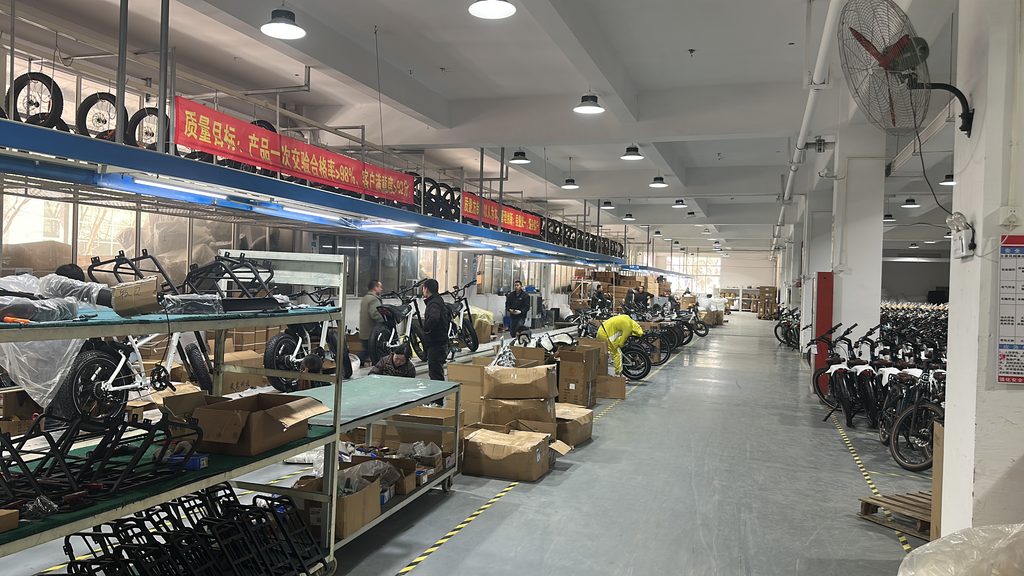
For businesses planning to purchase a fleet, working directly with an e-bike manufacturer can provide several advantages.
Instead of purchasing different bikes from different suppliers, a fleet operator can develop one consistent specification.
This makes maintenance easier because riders and technicians are working with the same motor, battery, brakes, displays, and replacement parts.
It can also make future purchasing easier.
For example, a delivery company may begin with 30 or 50 bikes to test a market. After the fleet proves successful, the company can continue ordering the same configuration.
For private-label brands, the manufacturer can also provide customized branding and packaging.
How to Build a Food Delivery E-bike Fleet
A simple fleet purchasing process can look like this:
Step 1: Define Your Delivery Requirements
Start with the actual working conditions.
Consider:
- Average delivery distance
- Daily riding hours
- Average cargo weight
- Road conditions
- Hills
- Weather
- Local speed regulations
- Charging facilities
Step 2: Choose the Bike Configuration
Based on these requirements, choose the appropriate frame, motor, battery, brakes, tires, and cargo system.
Step 3: Test a Sample
Before placing a large order, test the bike in real delivery conditions.
A sample should ideally be tested with the same type of cargo and route that the final fleet will use.
Step 4: Confirm Certifications
Make sure the bike and battery meet the requirements of your target market.
Different countries and regions have different requirements, so buyers should confirm the applicable regulations before placing a bulk order.
Step 5: Place the Fleet Order
After testing the sample and confirming the specifications, the manufacturer can begin bulk production.
Step 6: Plan Spare Parts
This step is often overlooked.
A commercial fleet should have commonly used spare parts available, including brake components, tires, displays, controllers, chargers, and other service parts.
A good spare-parts plan can reduce vehicle downtime.
Why Work With an E-bike OEM Manufacturer?
A delivery business does not necessarily need the cheapest electric bike.
It needs a bike that can continue working every day.
For fleet operators, the real cost includes purchase price, electricity, maintenance, replacement parts, downtime, and eventually battery replacement.
That is why choosing a reliable Electric Bike OEM Manufacturer can be more important than simply finding the lowest unit price.
Haidong E-Bike works with dealers, distributors, fleet operators, delivery companies, and private-label brands. The company provides OEM/ODM support, bulk production, customization, shipping, and after-sales support.
The company also operates production facilities in China and Vietnam and maintains overseas warehouse resources for different markets.
Final Thoughts
A good food delivery electric bike should be selected around the delivery operation, not simply around a product specification sheet.
Battery capacity, cargo capacity, motor performance, braking, frame strength, maintenance, spare parts, and local regulations all matter.
For a small restaurant, a reliable commuter-style e-bike may be enough. For a large delivery company or logistics operator, a heavy-duty cargo e-bike and a consistent fleet specification may be a better choice.
If you are planning to purchase food delivery e-bikes for a restaurant, delivery company, rental fleet, distributor, or private-label brand, working with an experienced OEM manufacturer can help you develop the right configuration for your market.
Haidong E-Bike provides OEM and ODM electric bikes for delivery companies, fleet operators, distributors, and private-label brands. Contact us to discuss your food delivery e-bike project, required specifications, and fleet quantity.

Leave a Reply