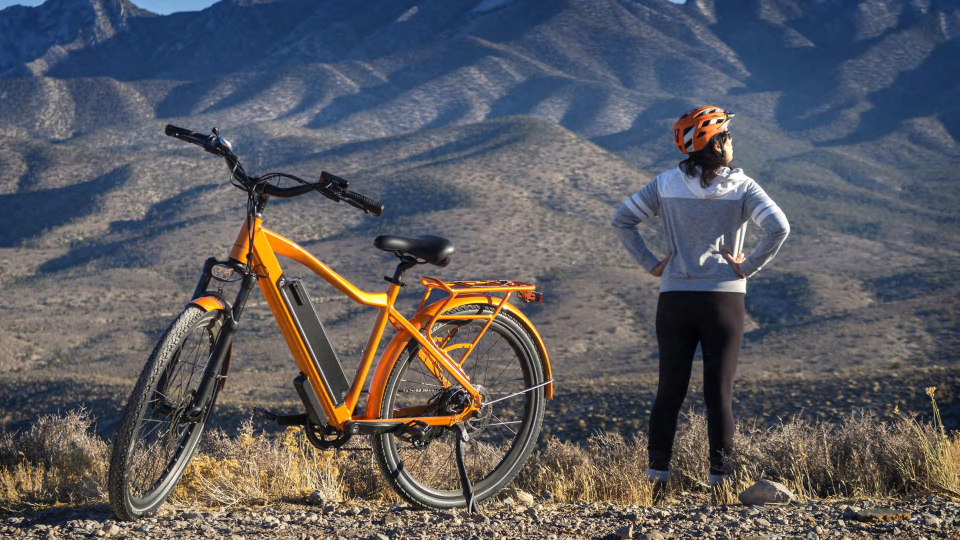
Finding the right ebike wholesale supplier is not simply about finding the lowest price. For bike shops, distributors, online retailers, and private-label brands, the supplier you choose can affect everything from product quality and delivery times to warranty support and customer satisfaction.
The electric bike market has become increasingly competitive. There are now hundreds of manufacturers offering city bikes, fat tire eBikes, folding models, mountain eBikes, cargo bikes, and high-power electric bikes. With so many options available, choosing the right manufacturing partner requires more than comparing a few FOB prices.
This guide explains what businesses should look for when selecting an eBike wholesale supplier and how to build a reliable long-term supply relationship.
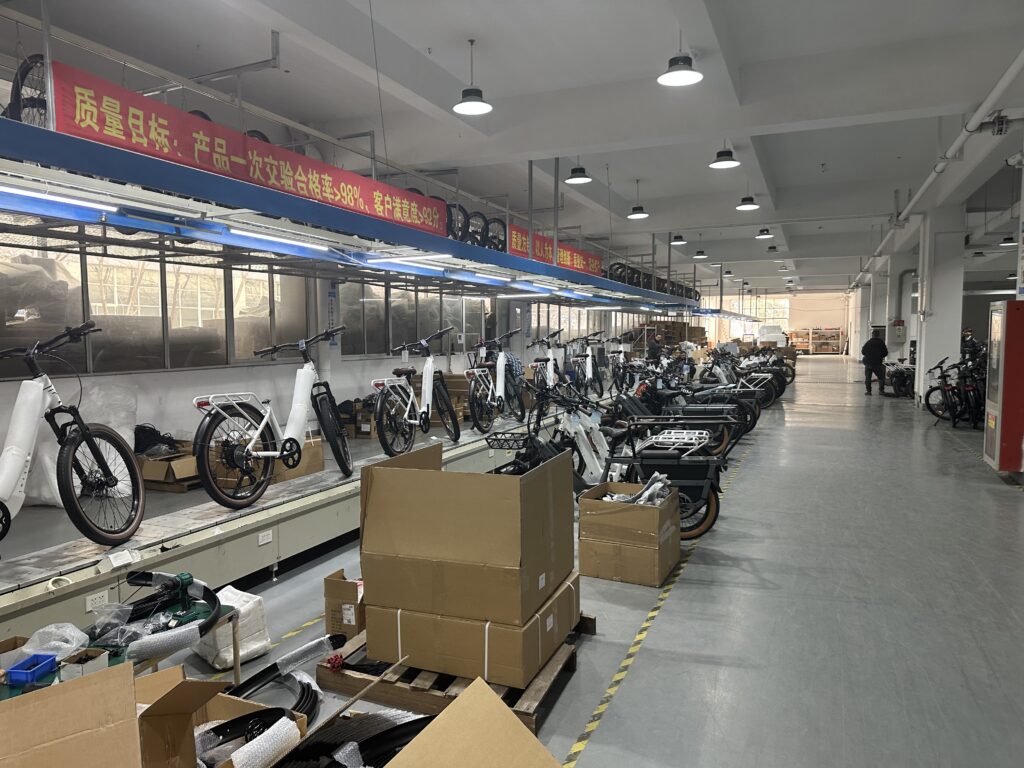
What Is an Ebike Wholesale Supplier?
An ebike wholesale supplier provides electric bicycles to businesses rather than individual consumers. Their customers may include bike dealers, distributors, online retailers, rental companies, fleet operators, and brands looking for OEM or ODM production.
Wholesale suppliers generally offer better pricing at higher order quantities. Depending on the supplier, businesses may also have access to:
- Wholesale pricing
- OEM and ODM services
- Private-label production
- Custom colors and components
- Custom logos and packaging
- Spare parts
- Technical support
- Warranty services
- Bulk shipping solutions
For a growing eBike business, working directly with a manufacturer can often provide more flexibility than buying through multiple layers of distributors.
Manufacturer or Trading Company?
This is one of the first questions a buyer should ask.
A trading company may have access to several factories and can sometimes offer a wide range of products. However, if you are developing your own brand or ordering customized eBikes, working directly with an experienced manufacturer can make communication and product development easier.
A manufacturer can usually provide more direct information about:
- Production capacity
- Frame materials
- Motor options
- Battery configurations
- Controller specifications
- Assembly processes
- Quality control
- Production lead times
This becomes particularly important when you need to modify an existing model instead of simply purchasing a standard product.
What Should You Check Before Choosing an eBike Supplier?
1. Product Quality
Price should never be the only factor when comparing suppliers.
Ask about the main components used on the bike, including the motor, battery, controller, brakes, drivetrain, display, and frame.
For example, two eBikes may look almost identical in a catalog but use completely different battery cells, controllers, braking systems, or motors.
A professional supplier should be able to provide a detailed specification sheet and explain the available component options.
2. Minimum Order Quantity
Minimum order quantity, or MOQ, is particularly important for new brands.
Some suppliers require hundreds of units for customized production, while others are willing to support smaller initial orders.
If you are testing a new market, a lower MOQ can reduce inventory risk and allow you to validate the product before placing a larger order.
When discussing MOQ, ask whether the minimum applies to:
- Standard models
- Custom colors
- Custom logos
- Custom components
- Full OEM development
These requirements can be very different.
3. OEM and ODM Capability
If you want to build your own eBike brand, don’t just look for an eBike wholesale supplier. Look for a supplier with real OEM/ODM experience.
OEM production may involve your own logo, colors, packaging, and component specifications.
ODM can go further, allowing you to modify the design, frame, battery configuration, motor system, or other components.
Before placing an order, ask the supplier what customization options are actually available.
4. Battery Safety and Certification
The battery is one of the most important components of an electric bicycle.
A professional supplier should be able to provide information about battery capacity, cell specifications, protection systems, and relevant transportation documentation.
Depending on your target market, different certifications and regulatory requirements may apply.
For businesses selling in the United States or European markets, make sure the supplier understands the compliance requirements for your specific product and market instead of simply saying that the bike is “certified.”
5. Production Capacity
A supplier may be able to produce 30 bikes without any problem, but that doesn’t necessarily mean they can handle a 500- or 1,000-unit order on schedule.
Ask about:
- Monthly production capacity
- Factory location
- Production lead time
- Quality inspection process
- Packaging
- Container loading
- Peak-season production schedules
This information becomes increasingly important as your business grows.
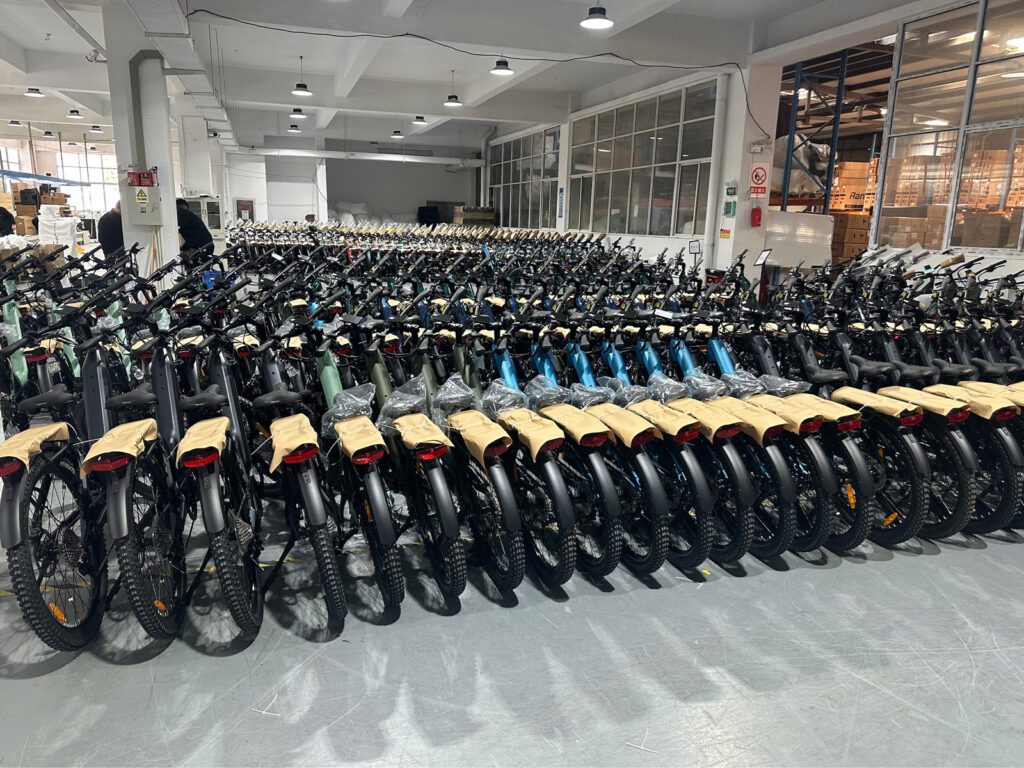
Don’t Ignore After-Sales Support
Many buyers focus heavily on the purchase price and shipping cost but overlook after-sales support.
Electric bikes contain multiple electrical and mechanical components. Even a well-designed product can eventually require replacement parts.
A good wholesale supplier should have a clear process for handling:
- Warranty claims
- Replacement parts
- Battery issues
- Motor problems
- Controller failures
- Display problems
- Mechanical components
For distributors and bike shops, access to spare parts can be just as important as the original bike price.
Ask for Samples Before a Large Order
If you have never worked with a supplier before, ordering a sample is usually a smart step.
A sample allows you to evaluate the actual product rather than relying only on photographs or specifications.
You can test:
- Riding comfort
- Motor performance
- Braking
- Battery range
- Frame quality
- Welding
- Assembly
- Packaging
- Overall appearance
For private-label businesses, a sample is also a good opportunity to confirm the logo placement, colors, accessories, and other customization details before mass production.
Compare the Total Cost, Not Just the FOB Price
A low FOB price doesn’t always mean a lower overall cost.
Your actual cost may include:
Product price + customization + packaging + spare parts + freight + duties + warehousing + after-sales costs
For example, a supplier offering a slightly higher unit price may provide better packaging, fewer defective units, faster production, or better warranty support.
For long-term B2B relationships, the total landed cost is often more important than the initial factory quotation.
Why OEM eBikes Are Becoming More Popular
Many retailers don’t want to compete using exactly the same product as dozens of other sellers.
This is where private-label and OEM eBikes become attractive.
Instead of selling a generic model, a business can create a more recognizable product with its own:
- Brand name
- Logo
- Color scheme
- Packaging
- Accessories
- Product specifications
- Marketing strategy
This can help bike shops and distributors differentiate themselves from competitors.
If you’re considering this approach, you can learn more about custom electric bikes and how manufacturers can support private-label projects.
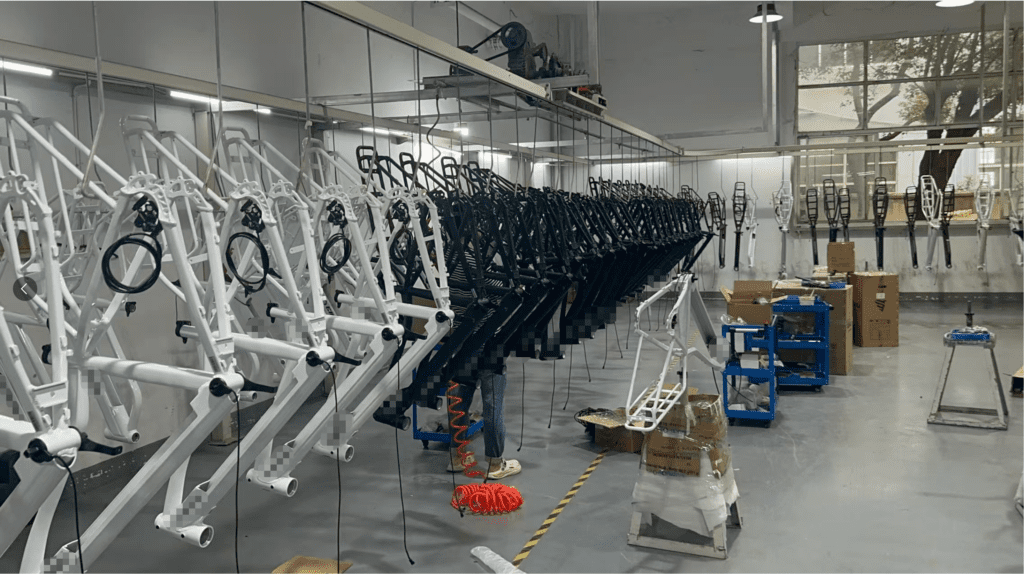
How to Build a Long-Term Supplier Relationship
The best wholesale supplier is not necessarily the company offering the cheapest quotation.
A strong supplier relationship usually comes from clear communication and realistic expectations.
Before placing an order, make sure both sides agree on:
- Product specifications
- MOQ
- Unit price
- Payment terms
- Production lead time
- Packaging requirements
- Quality standards
- Warranty terms
- Spare parts
- Shipping arrangements
It’s also useful to maintain the same point of contact throughout the project. This reduces misunderstandings when specifications or production requirements change.
Final Thoughts
Choosing the right ebike wholesale supplier is a long-term business decision.
For a small retailer, the priority may be low MOQ and fast delivery. For a growing distributor, production capacity and pricing may become more important. For a new eBike brand, OEM capability, customization, quality control, and after-sales support can make a much bigger difference.
The best approach is to compare suppliers based on the entire business relationship rather than simply choosing the lowest quotation.
If you are planning to launch your own eBike brand, work with dealers, or purchase electric bikes in bulk, finding a manufacturer that can support both your first order and future growth can save significant time and money.

Leave a Reply