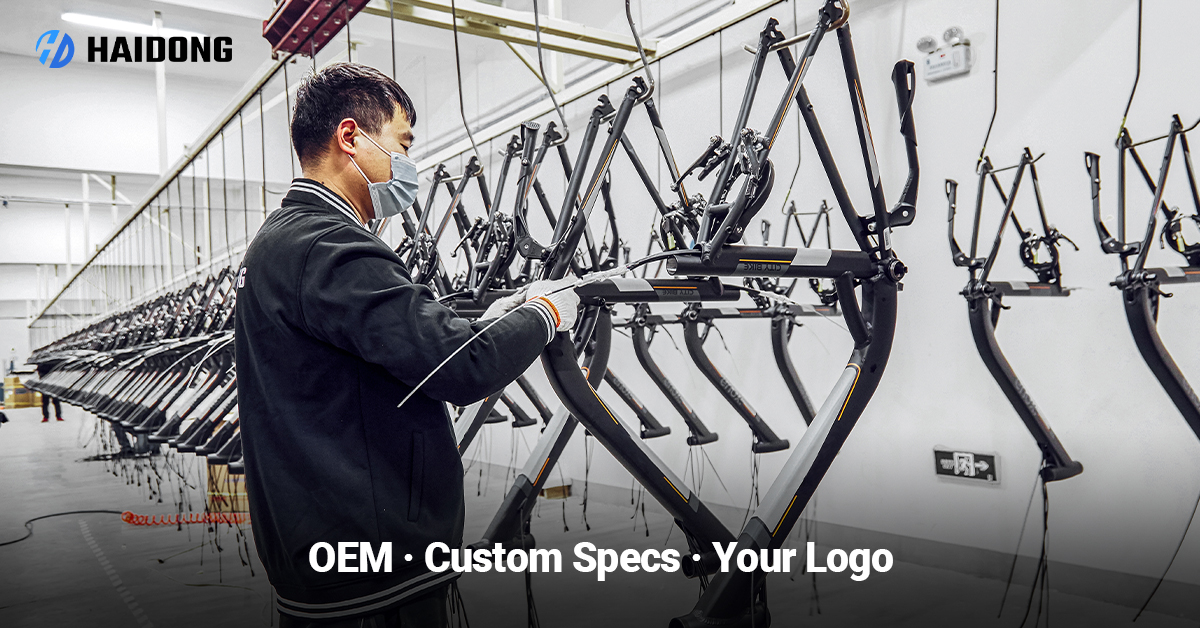
The European electric bike market continues to develop, creating new opportunities for bicycle brands, distributors, wholesalers, and mobility companies. As customer expectations change, businesses are looking for more than standard electric bikes. They need products that match local riding habits, meet European regulatory requirements, and support long-term brand development.
Working with a reliable Custom Electric Bike Manufacturer allows European brands to develop electric bikes that match their target customers and market positioning. From motor systems and battery capacity to frame geometry and component selection, every detail can be adjusted to meet specific business requirements.
From frame design and battery configuration to motor selection, branding, and final assembly, OEM manufacturing allows European brands to build products around their own market requirements.
For companies planning to enter or expand in Europe, choosing the right manufacturing partner is an important part of the process.
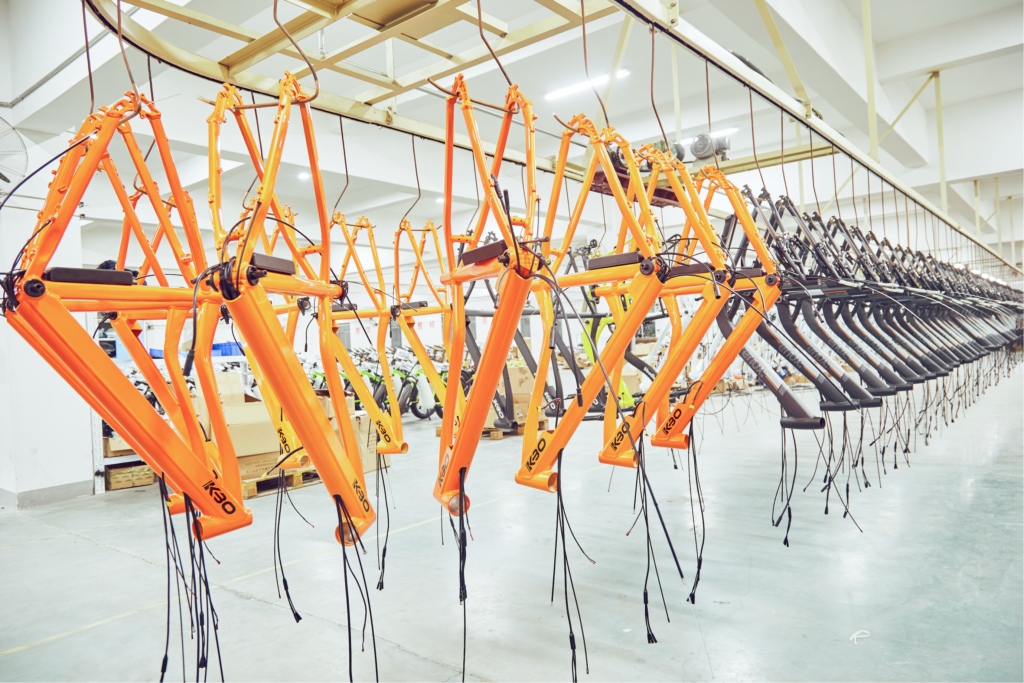
Why European Brands Choose Electric Bike OEM Manufacturing
European customers have different expectations depending on the country and riding environment. Commuter bikes, trekking e-bikes, city bikes, and cargo bikes all serve different purposes.
A standard electric bike may not meet every brand’s requirements.
OEM manufacturing gives businesses more control over product specifications and market positioning.
Some common reasons European brands choose OEM production include:
- Developing exclusive electric bike models for their own brands.
- Adjusting motor power and battery capacity for local requirements.
- Customizing frame geometry, colors, and components.
- Selecting different configurations for city, trekking, and cargo applications.
- Building a consistent product range for long-term sales.
- Improving product differentiation in competitive markets.
For established distributors, OEM manufacturing can also help reduce direct price competition by offering products that are not identical to those sold by other retailers.
Understanding European E-Bike Regulations
Regulatory compliance is one of the most important considerations when developing electric bikes for Europe.
For conventional EPAC electric bicycles, EN 15194 is a key European standard. A typical compliant EPAC is limited to a continuous rated motor power of 250W, with motor assistance gradually reducing and cutting off when the bicycle reaches 25 km/h or when the rider stops pedaling.
However, not every electric bicycle falls into this category. Higher-powered models and vehicles with different speed configurations may be subject to different vehicle classification and approval requirements.
OEM manufacturers should understand these differences before confirming product specifications.
Important compliance considerations include:
CE Compliance
Products placed on the European market must meet all applicable EU requirements. CE marking is a manufacturer’s declaration of conformity with the relevant legislation, rather than a quality certificate by itself.
EN 15194
This standard covers safety requirements and test methods for electrically power-assisted cycles within its scope.
Battery Safety
Lithium battery systems require careful attention to cell selection, battery management systems, charging protection, and applicable transport and product safety requirements.
UN38.3 and MSDS
These documents are commonly requested for lithium battery transportation. They should not be confused with complete product certification.
Before starting OEM production, European brands should confirm which standards and regulatory requirements apply to their specific products.
Choosing the Right Electric Bike Configuration
A successful electric bike project starts with the right product configuration.
Different European markets have different customer preferences. Some customers prioritize lightweight city commuting, while others prefer long-distance trekking bikes or practical cargo solutions.
An experienced electric bike OEM manufacturer should be able to help customers evaluate the following components.
Motor System
Motor selection affects riding performance, efficiency, and the overall riding experience.
For conventional European EPAC models, a 250W rated motor with pedal assistance up to 25 km/h is a common configuration.
Brands should also consider motor torque, sensor type, controller programming, and compatibility with the complete electrical system.
Battery Capacity
Battery capacity influences the expected riding range, bike weight, and product cost.
Common battery configurations include 36V and 48V systems with different capacity options.
For European city bikes, a compact integrated battery may provide a cleaner appearance. For trekking and cargo models, larger battery capacities may be more suitable.
The final configuration should balance riding range, weight, design, and cost.
Frame Design
Frame design is another important part of OEM development.
European brands may require step-through frames for city riding, traditional diamond frames for trekking, or reinforced structures for cargo applications.
OEM customization can include:
- Frame geometry and dimensions.
- Integrated battery designs.
- Internal cable routing.
- Custom frame colors and finishes.
- Brand logos and private-label graphics.
- Different frame sizes and component combinations.
These details help create a product that fits the brand’s identity and target customers.
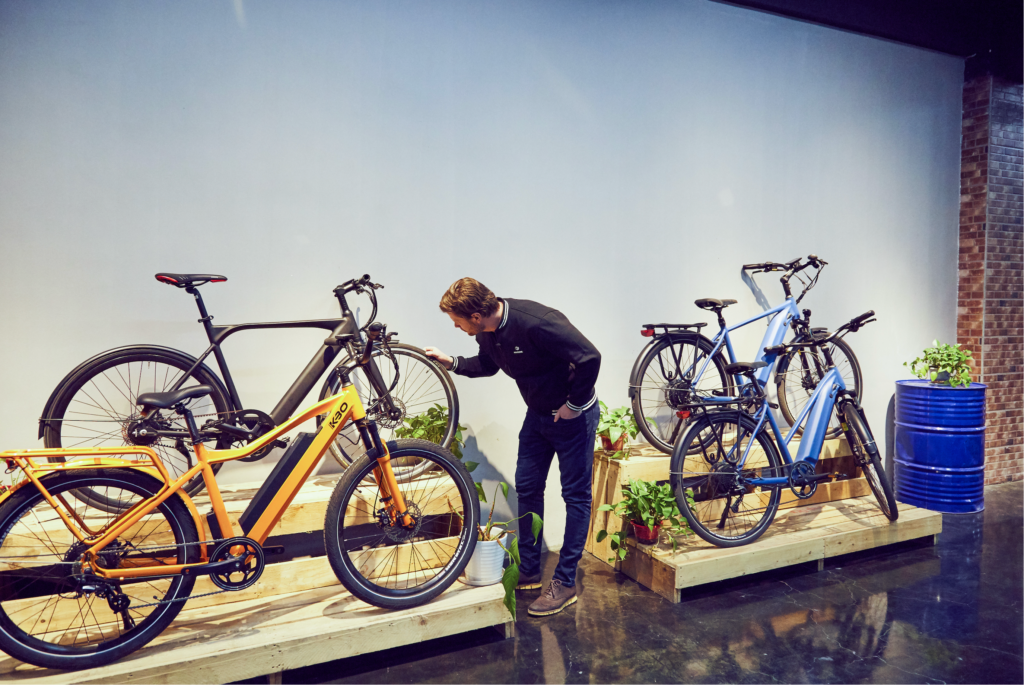
Vietnam Manufacturing for the European E-Bike Market
Manufacturing location has become an important consideration for companies importing electric bikes into Europe.
Some brands are exploring production outside China to diversify their supply chains and evaluate different import duty arrangements.
Vietnam has become one of the manufacturing locations considered by international electric bike businesses.
Depending on the project, production can involve frame manufacturing, component sourcing, painting, final assembly, and quality inspection.
However, manufacturing in Vietnam does not automatically guarantee preferential tariff treatment.
European importers should confirm the applicable rules of origin, product-specific origin requirements, and supporting documentation before making purchasing decisions.
A qualified manufacturing partner should be able to explain the production process and provide the necessary documentation for the actual origin of the products.
For brands planning long-term cooperation, it is important to evaluate not only production costs but also manufacturing capacity, quality control, supply chain stability, and after-sales support.
What to Look for in an Ebike OEM Manufacturer
Choosing an OEM supplier involves more than comparing quotations.
A reliable manufacturing partner should understand the entire development process, from the first product discussion to mass production.
Here are several factors worth considering.
1. Product Development Capabilities
Check whether the factory can support frame customization, component selection, battery integration, and product rendering.
A supplier with its own engineering and design capabilities can help identify potential problems before sample production.
2. Manufacturing Capacity
Production capacity matters when planning seasonal orders or expanding into multiple European markets.
Ask about factory facilities, production lines, monthly output, and normal lead times.
It is also important to understand how the factory manages quality during mass production.
3. Quality Control
Electric bikes combine mechanical, electrical, and battery systems.
Quality inspection should cover frame welding, paint quality, electrical connections, braking systems, battery performance, and complete bike testing.
A consistent inspection process helps reduce potential problems after products reach distributors and retailers.
4. Customization and MOQ
Not every brand needs thousands of electric bikes at the beginning.
Ask the manufacturer about minimum order quantities for frame customization, logo printing, battery configurations, and different colors.
Understanding these requirements early can help businesses plan their first order more efficiently.
5. After-Sales Support
After-sales service is particularly important for European distributors.
A good OEM partner should provide technical documentation, spare parts support, troubleshooting assistance, and clear warranty procedures.
The availability of replacement components and long-term technical support can directly affect a retailer’s customer service experience.
From Product Design to Mass Production
A professional OEM project usually follows several stages.
Step 1 – Project Discussion
The customer shares the target market, product positioning, expected retail price, and preferred specifications.
Step 2 – Product Configuration
The manufacturer helps confirm the frame design, motor, battery, drivetrain, brakes, and other components.
Step 3 – Rendering and Sample Development
The design team prepares product renderings for confirmation. Once the specifications are approved, sample production can begin.
Step 4 – Sample Testing
The sample bike is evaluated for appearance, riding performance, component compatibility, and applicable compliance requirements.
Step 5 – Mass Production
After sample approval, the factory arranges component procurement, production scheduling, assembly, and quality inspection.
Step 6 – Shipping and After-Sales Support
Finished electric bikes are prepared for shipment with the required commercial and transport documentation. The OEM partner continues to provide technical and warranty support.
Having a clear process helps both sides reduce communication problems and avoid unnecessary changes during production.
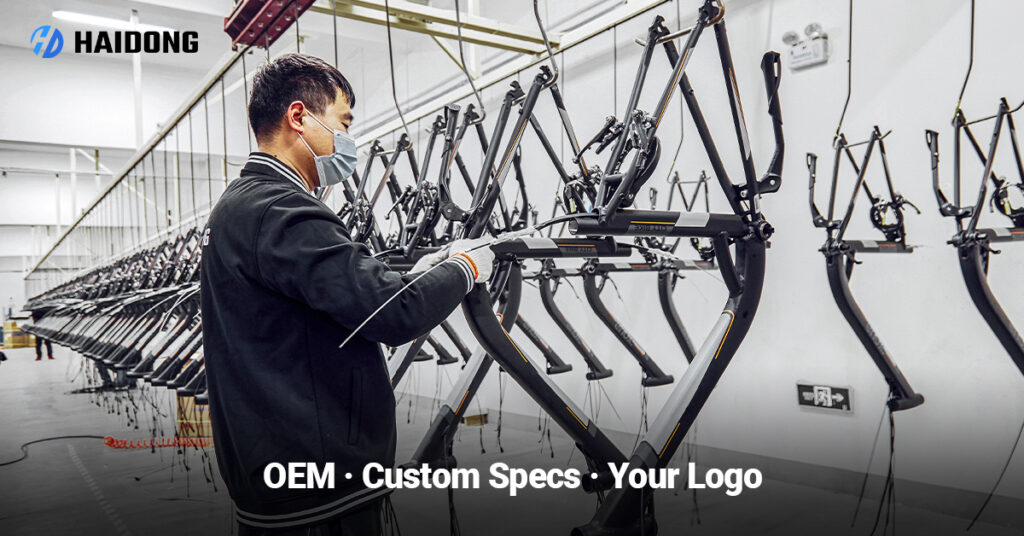
HAIDONG – Your Electric Bike OEM Manufacturing Partner
HAIDONG focuses on electric bike OEM and ODM manufacturing for international brands, distributors, and commercial customers.
In addition to commuter and city electric bikes, HAIDONG also supports commercial electric bike projects, including food delivery and fleet applications. As an experienced Delivery Ebike Factory, we help businesses develop practical electric bikes with customized battery capacity, motor configurations, and durable components for daily commercial use.
With manufacturing facilities in China and production resources in Vietnam, HAIDONG supports customers looking to develop customized electric bikes for different international markets.
Our manufacturing capabilities include:
- Custom electric bike frame development.
- Private-label branding and color customization.
- Motor and battery configuration.
- City, commuter, trekking, and cargo electric bikes.
- Sample development and mass production.
- Production inspection and technical support.
We understand that European brands need more than a supplier offering standard electric bikes. They need a manufacturing partner who can communicate clearly, understand their product requirements, and support their business as it grows.
Whether you are developing a new city e-bike, expanding an existing product range, or planning a private-label electric bike project, our team can help evaluate the right manufacturing solution.
Frequently Asked Questions
What is the MOQ for ebike OEM manufacturing?
MOQ depends on the level of customization. For standard HAIDONG OEM projects, the typical minimum order quantity is 30 units. New logo customization may require a different quantity depending on the production arrangement.
Can I customize the frame and battery?
Yes. OEM projects can include frame geometry, frame colors, logo placement, battery capacity, motor systems, and other component configurations. The feasibility and MOQ depend on the specific design.
Does an electric bike for Europe need EN 15194?
For conventional EPAC electric bicycles within its scope, EN 15194 is an important harmonized European standard. The exact compliance requirements depend on the product configuration and applicable EU legislation.
Can you manufacture electric bikes in Vietnam?
Yes. HAIDONG supports manufacturing and assembly arrangements involving Vietnam. The specific production process depends on the project requirements and should be confirmed before placing an order.
How long does OEM electric bike production take?
Production time depends on product complexity, component availability, sample approval, and order quantity. For many standard bulk projects, the usual production lead time is approximately 30 days after the relevant production arrangements are confirmed.
Can you support long-term after-sales service?
Yes. HAIDONG provides technical assistance, spare parts support, and warranty services for its OEM customers. Specific warranty terms and responsibilities should be confirmed in the cooperation agreement.
Start Your European E-Bike OEM Project
Finding the right ebike OEM for Europe market is an important step for brands looking to build a competitive electric bike business.
The right manufacturing partner should offer product development capabilities, reliable production, customization options, regulatory awareness, and long-term technical support.
HAIDONG welcomes inquiries from European electric bike brands, distributors, and businesses interested in OEM and ODM cooperation.
Contact our team to discuss your product ideas, specifications, and manufacturing requirements.

Leave a Reply