If you’ve been thinking about importing electric bikes from China, you’ve probably already noticed something:
There are thousands of suppliers online, prices vary wildly, and almost every factory claims they offer “high quality” and “best service.”
But importing e-bikes is not the same as importing simple consumer products.
Between UL certifications, lithium battery shipping, tariffs, spare parts, and after-sales support, one wrong decision can easily turn into a very expensive lesson.
This guide explains how most professional buyers actually import electric bikes from China — and how to avoid the common mistakes new importers make.
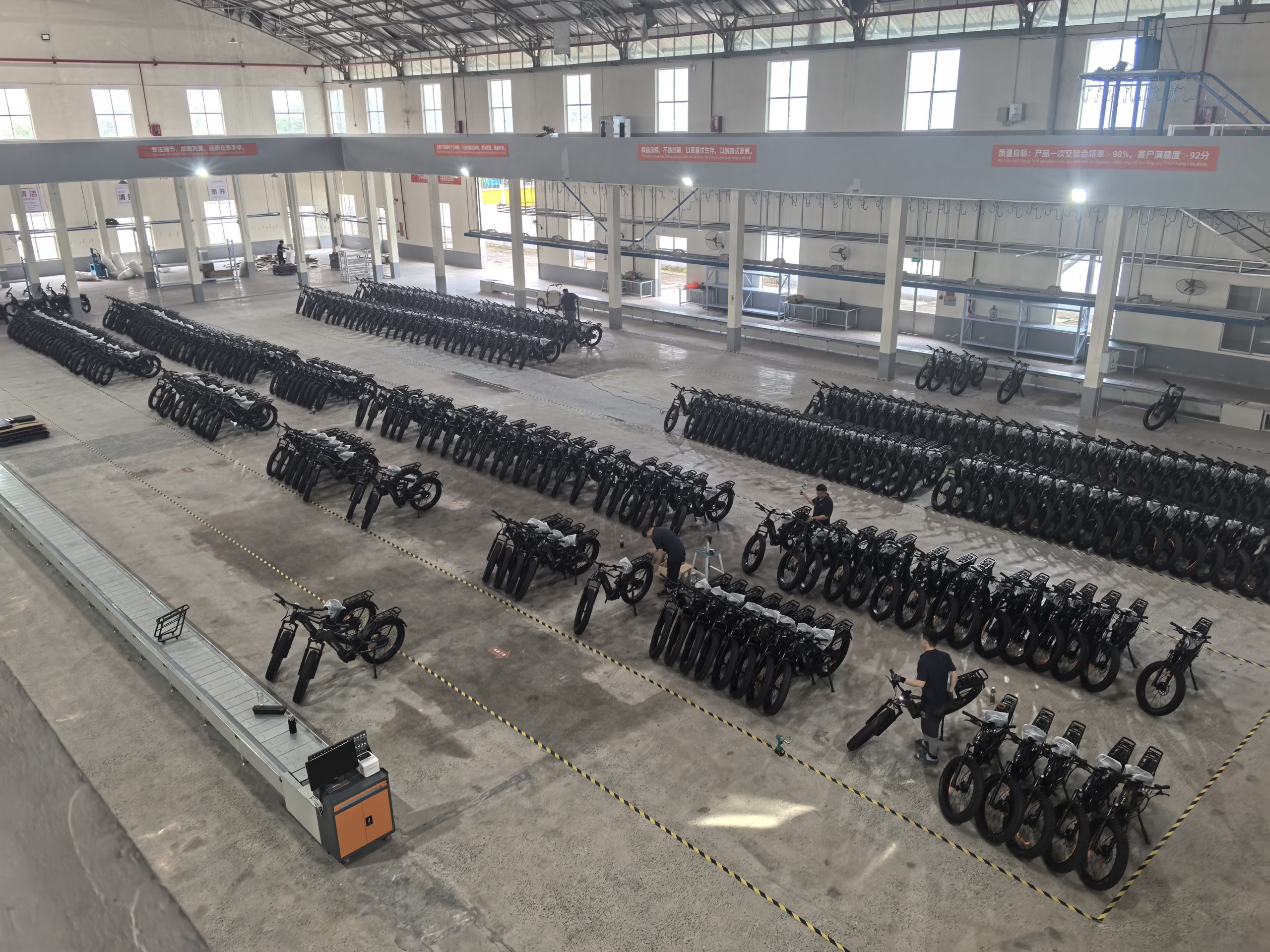
The process below is based on real OEM and wholesale experience from Haidong Electric Bike, a China & Vietnam-based electric bike manufacturer working with distributors, fleet operators, and private-label e-bike brands.
Why Most E-Bike Importers Choose China
China still dominates the global e-bike supply chain for one simple reason:
Almost every major component is already there.
Motors, batteries, controllers, displays, frames, brakes, tires, and assembly factories are all connected inside one manufacturing ecosystem.
That creates several advantages for importers:
- Lower production costs
- Faster customization
- Better component availability
- Easier OEM branding
- Faster product development
Many buyers also choose factories with Vietnam assembly capabilities to reduce tariff pressure and improve supply chain flexibility for the US and European markets
Step 1: Decide What Type of Electric Bike You Actually Need
One of the biggest mistakes new buyers make is choosing products based only on appearance.
A bike that sells well in one market may completely fail in another.
Before contacting factories, define:
Your Target Customer
Ask yourself:
- Are you selling to commuters?
- Delivery riders?
- Hunting users?
- Rental businesses?
- Older riders?
- Urban consumers?
Different users need completely different bikes.
For example:
- Cargo e-bikes work well for delivery and commercial fleets
- Fat tire bikes are popular in North America
- Step-thru commuter bikes are easier for older riders
- Folding e-bikes help urban customers with limited storage
Factories like Haidong Ebike. usually offer multiple categories including commuter bikes, cargo bikes, mountain bikes, and electric dirt bikes
Step 2: Understand E-Bike Certifications Before You Import
This is where many importers get into trouble.
In the United States especially, certification matters much more than before.
Important Certifications to Check
UL 2849
UL 2849 is becoming increasingly important in the US market because it covers the electrical safety system of electric bikes. Many distributors and marketplaces now require it.
EN15194
Required for many European markets.
UN38.3
Necessary for lithium battery transportation compliance.
Do not simply ask a supplier:
“Do you have certifications?”
Instead, ask:
- Which exact model is certified?
- Can you provide the test report?
- Is the battery included in the certification?
- Is the certification under your company name?
A surprising number of suppliers avoid these questions.
Step 3: Don’t Choose an E-Bike Supplier Based Only on Price
Cheap pricing often creates expensive problems later.
A low-cost supplier may save you money initially, but poor quality control can destroy dealer relationships and customer trust.
When evaluating a factory, look for:
Manufacturing Experience
Experienced factories usually have:
- Stable supply chains
- Better QC systems
- More mature production processes
- Faster problem solving
OEM & Customization Capability
Good factories should support:
- Custom logos
- Frame colors
- Motor configurations
- Battery options
- Packaging customization
- App or GPS integrations
Many growing brands start with small customization orders before developing full proprietary models.
Spare Parts & After-Sales Support
This is extremely important.
A supplier that disappears after shipment becomes a nightmare for dealers.
Ask whether the factory has:
- Overseas warehouses
- Spare parts inventory
- Technical support
- Warranty procedures
Factories with US or EU warehouses can reduce downtime significantly.
Step 4: Request Samples Before Bulk Orders
Never place a large order immediately.
Professional importers almost always test samples first.
During sample testing, check:
- Motor performance
- Battery range
- Brake quality
- Controller response
- Frame welding
- Packaging quality
- Water resistance
- Real riding comfort
You should also test after-sales communication during this phase.
A factory’s response speed before payment often tells you how they will behave after shipment.
Step 5: Understand MOQ (Minimum Order Quantity)
Many new importers assume they must buy a full container immediately.
That’s no longer always true.
Some OEM factories now support flexible MOQs for startup brands and distributors.
Typical situations include:
- Sample orders
- Mixed-model container orders
- Small batch brand testing
- OEM logo customization
For example, some projects may start around 30–50 units depending on customization requirements.
This helps smaller businesses test markets without excessive inventory risk.
Step 6: Learn the Real Shipping Costs
Shipping electric bikes is more complicated than regular products because of lithium batteries.
Your total landed cost may include:
- Product cost
- Ocean freight
- Import duties
- Customs clearance
- Local trucking
- Battery shipping fees
- Warehouse costs
Always ask suppliers whether their quotation is:
- EXW
- FOB
- CIF
- DDP
New importers often misunderstand these shipping terms and underestimate final costs.
Step 7: Build a Long-Term Supplier Relationship
The best e-bike importers rarely switch factories constantly.
A stable manufacturing partner can help with:
- Faster product development
- Better pricing
- Priority production
- Spare parts support
- Market feedback
- Exclusive models
Over time, strong factory relationships often become a competitive advantage.
Common Mistakes New E-Bike Importers Make
Choosing the Cheapest Supplier
Low prices sometimes mean:
- Lower-grade cells
- Weak controllers
- Poor weld quality
- Unstable supply chains
Ignoring Certification Requirements
This can create customs issues, insurance problems, or marketplace restrictions.
Ordering Too Many Units Too Early
Testing the market first is usually safer.
Forgetting Spare Parts
Without local spare parts support, even small problems become expensive.
Not Verifying Real Factory Capability
Some suppliers are only trading companies with limited control over production.
Final Thoughts
Importing electric bikes from China can be highly profitable when done correctly.
But success usually depends on choosing the right manufacturing partner — not simply finding the lowest quote online.
A reliable supplier should help you with:
- Product selection
- Certification compliance
- OEM customization
- Spare parts support
- Logistics coordination
- Long-term business growth
Companies like Hiadong Electric Bike OEM Services focus on supporting distributors, fleet operators, and private-label brands with flexible OEM production, certification support, and global wholesale solutions.

Leave a Reply