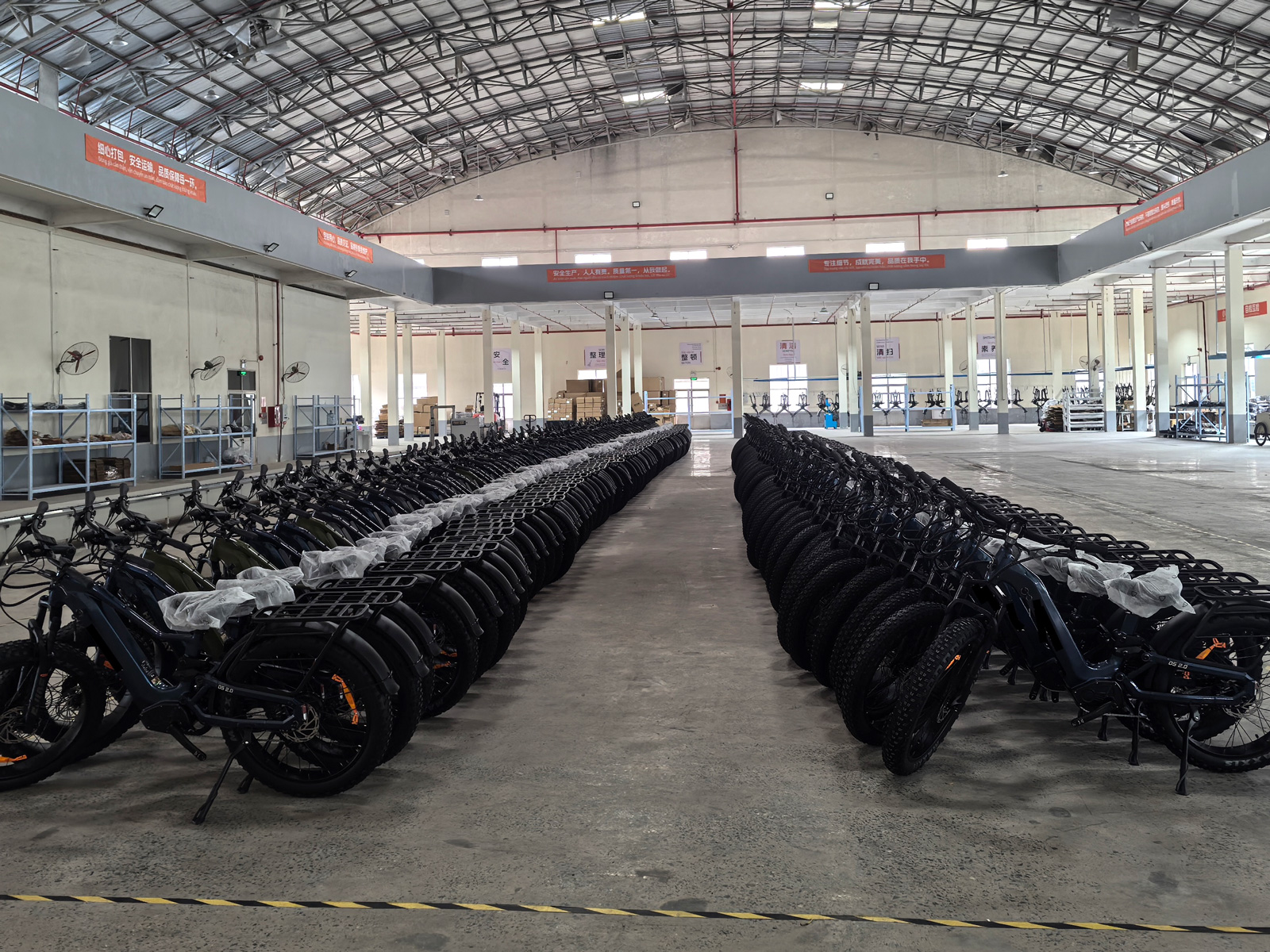
A few months ago, one of our customers from Eastern Europe asked me a very direct question during a video call:
“Can you still supply electric bikes to Europe without the China tariff problem?”
At that time, he had already talked with several factories. Some were too expensive, some had unstable delivery times, and some simply could not explain clearly where the bikes were actually assembled.
That conversation reminded me of something I’ve been hearing more often lately.
For many ebike distributors, wholesalers, and private label brands, the conversation is no longer only about motor power, battery range, or frame design. The bigger issue now is supply chain risk — especially for the USA and EU markets.
That is exactly why more buyers are searching for a reliable Vietnam ebike factory with export capability to both Europe and North America.
Why Vietnam Is Becoming Important for Ebike Manufacturing
Over the last few years, Vietnam has quietly become one of the most discussed manufacturing locations in the ebike industry.
Not because it is “cheap.”
Actually, many buyers are surprised that Vietnam production costs are not dramatically lower than China.
The real reason is trade access.
For importers selling into the European market, Vietnam offers advantages through trade agreements that can reduce or avoid some import duties depending on product classification and local assembly conditions.
For the US market, buyers are also trying to diversify sourcing away from a single-country supply chain. Many distributors simply do not want all production tied to one region anymore.
That’s why searches like these have increased significantly:
- Vietnam ebike factory
- electric bike manufacturer Vietnam
- ebike OEM Vietnam
- duty free ebike supplier USA
- EU compliant electric bike factory
- fat tire ebike wholesale supplier
Most of these searches are not coming from consumers.
They are coming from importers, Amazon sellers, dealer groups, and startup brands trying to build more stable sourcing channels.
What Buyers Actually Care About Now
From my experience talking with B2B customers, most buyers are not asking for the “best bike.”
They are asking questions like:
- Can you handle OEM branding?
- Do you support small MOQ orders?
- Can the bikes pass EU regulations?
- Do you have UL-certified battery options?
- Can you ship directly to our warehouse?
- Is your factory experienced with dealer programs?
- Can you customize packaging and accessories?
This is where many factories struggle.
A lot of suppliers still focus only on manufacturing. But overseas buyers now expect factories to work more like long-term partners.
Especially in the ebike industry.
Because unlike simple consumer electronics, electric bikes involve logistics, after-sales parts, local regulations, battery compliance, and dealer support.
Vietnam Assembly + China Supply Chain Is Becoming Common
One thing many people misunderstand is this:
Vietnam manufacturing does not necessarily mean every component is made locally.
In reality, many factories use a mixed supply chain model.
Frames, motors, batteries, controllers, and other components may still come from established Asian suppliers, while final assembly, testing, packaging, and export operations are completed in Vietnam.
For B2B buyers, this is usually more important than marketing language.
They care about whether the supply chain is stable and whether customs clearance can be handled properly.
A serious ebike supplier should be able to explain:
- where assembly takes place
- what certifications are available
- how shipping documents are prepared
- which markets the bikes are intended for
If a supplier avoids these conversations, that is usually a red flag.
EU Market: EN15194 Is Still the Basic Requirement
For European customers, compliance remains one of the first filters.
Most distributors already know this, but many new importers still underestimate how important certification is.
For standard electric bicycles entering Europe, EN15194 compliance is usually the baseline requirement.
That includes areas like:
- electrical safety
- EMC testing
- pedal assist systems
- speed limitations
- battery integration
If you are planning to build a long-term ebike brand in Europe, working with a factory that already understands EU compliance can save a lot of time later.
Especially if you plan to work with retailers or local distributors instead of only online sales.
USA Market: Dealers Want More Flexible Suppliers
The US market is slightly different.
In America, many dealers are not looking for huge container orders anymore.
A lot of smaller distributors now want:
- mixed models in one shipment
- private label branding
- lower MOQ
- warehouse support
- replacement parts access
- fast communication
This is particularly true for fat tire ebikes, utility ebikes, and cargo-style models.
Many US buyers are also searching for suppliers that understand local trends instead of simply copying generic Alibaba listings.
That’s why having flexible OEM/ODM capability matters much more now than it did a few years ago.
What We’ve Noticed From Serious B2B Buyers
The buyers who usually succeed in the ebike business are not necessarily the biggest companies.
Often, they are the ones who move faster and test the market carefully.
They start with:
- sample orders
- dealer feedback
- small private label runs
- local advertising
- regional distribution
Then they scale gradually.
This is especially common in North America.
Some customers begin with just a few units for testing, then slowly expand into dealership programs or regional distribution.
From a factory perspective, supporting these smaller but serious buyers has become increasingly important.
Because many of them eventually become long-term partners.
Choosing the Right Vietnam Ebike Factory
If you are currently looking for an ebike supplier in Vietnam for the USA or EU market, here are a few things worth checking carefully:
Manufacturing Experience
Not every bicycle factory understands electric bikes deeply. Battery systems, motors, controllers, and certification processes require separate experience.
Export Experience
A factory may produce good bikes but still struggle with customs documents, packaging rules, or international logistics.
OEM & Customization
For B2B business, branding flexibility matters. Packaging, logos, frame colors, and accessories should all be customizable.
Compliance Knowledge
For Europe especially, suppliers should already understand EN15194 and related market requirements.
Communication Speed
This sounds simple, but it matters more than most people expect. Slow communication causes major delays in international business.
Final Thoughts
The ebike industry is changing quickly.
A few years ago, many importers only focused on price.
Now, supply chain flexibility, compliance, and long-term stability matter much more.
That’s one reason Vietnam ebike factories are getting more attention from USA and EU buyers.
Not because Vietnam is “perfect,” but because buyers want more options, lower trade risk, and more flexible manufacturing partnerships.
For distributors, wholesalers, and private label brands, choosing the right factory today is less about finding the cheapest supplier — and more about finding a partner that can actually support long-term growth.
And that’s probably where the industry is heading next.

Leave a Reply