In many e-bike sourcing conversations, safety standards are usually mentioned at the end of the discussion—after motor power, battery size, and price.
But in practice, for most US and EU importers, safety standards are what determine whether a product can actually enter the market.
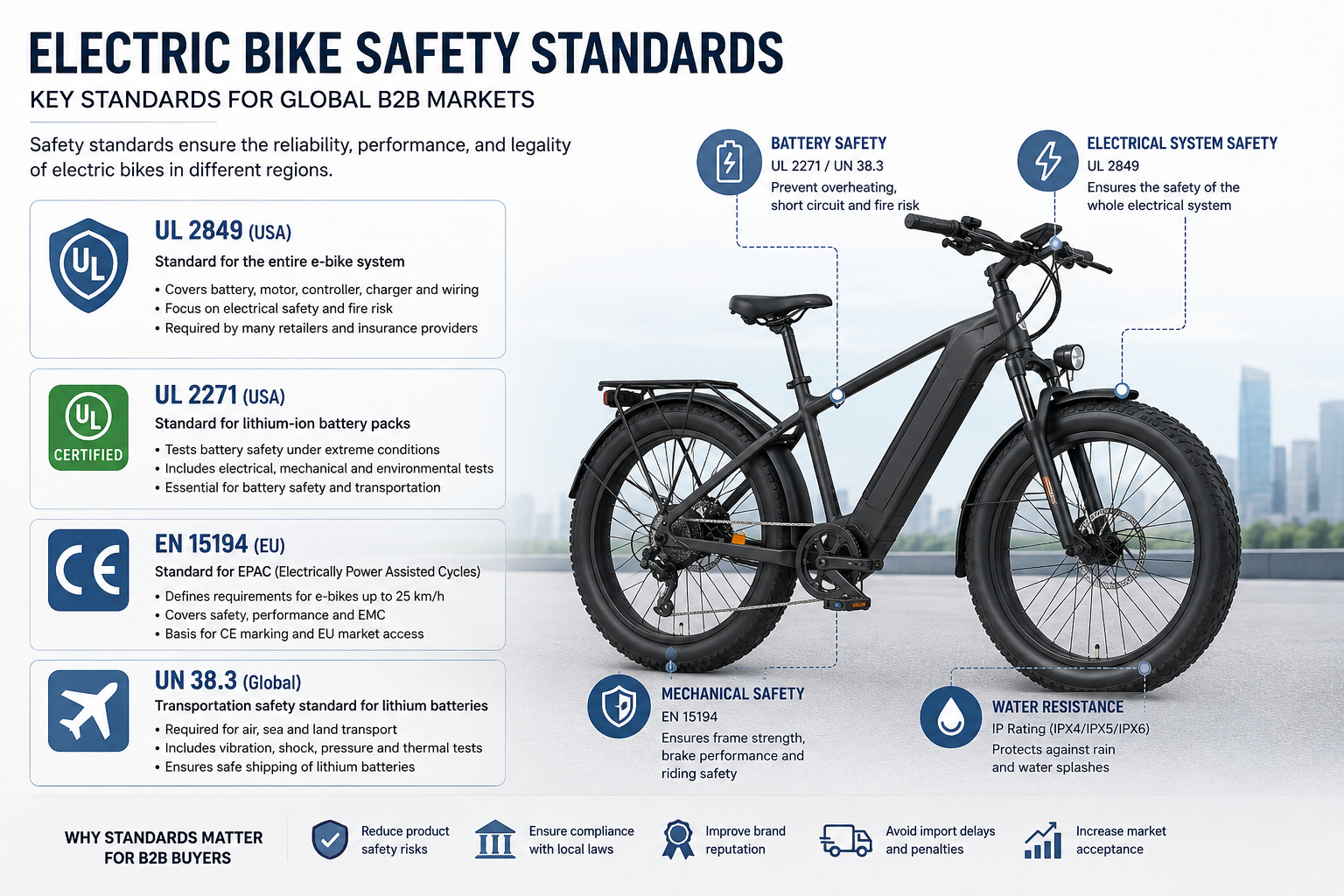
This article summarizes the main electric bike safety standards that matter for OEM/ODM buyers and distributors, especially in North America and Europe.
1. Why electric bike safety standards exist
Safety standards are designed to reduce these risks to an acceptable commercial level, especially for electric bike safety standards for US and EU markets.
Electric bikes combine three systems in one product:
- High-energy lithium battery packs
- High-current motor systems
- Consumer-level mechanical structures
This combination creates risks that are not present in traditional bicycles, such as:
- Battery overheating or thermal runaway
- Electrical short circuits
- Charger incompatibility
- Mechanical failure under load
- Water ingress in coastal or wet environments
Safety standards are designed to reduce these risks to an acceptable commercial level.
2. UL 2849 (United States – Full E-Bike System Standard)
UL 2849 is the most referenced safety standard for e-bikes in the US market.especially for UL 2849 and UL 2271 certification requirements for e-bikes.
Unlike battery-only tests, UL 2849 evaluates the entire electrical system, including:
- Battery pack
- Motor system
- Charger
- Wiring harness
- Control unit integration
The focus is system-level safety, not individual components.
Key test areas include:
- Electrical fire risk
- Thermal management under load
- Overcharge and short-circuit protection
- System fault behavior
In US distribution channels, UL 2849 is increasingly requested by retailers and insurers, especially for DTC brands and marketplace listings.
3. UL 2271 (Battery Pack Safety Standard)
UL 2271 focuses specifically on lithium-ion battery packs used in light electric vehicles.
It tests the battery under conditions such as:
- Mechanical shock and vibration
- Overcharge and deep discharge
- External short circuit
- Temperature cycling
- Internal cell failure simulation
Important distinction:
UL 2271 applies only to the battery pack itself.
It does not evaluate the full e-bike system.
4. EN 15194 (European Union E-Bike Standard)
EN 15194 is the main safety standard for electrically assisted bicycles in the EU.
It covers:
- Motor assistance limits (up to 25 km/h assistance cut-off)
- Electrical safety of components
- Mechanical safety of bicycle structure
- EMC (electromagnetic compatibility)
Unlike US standards, EN 15194 is closely tied to regulatory classification of e-bikes as “EPAC” (Electrically Power Assisted Cycles).
This affects whether the product is treated as a bicycle or a motor vehicle in certain jurisdictions.
This directly impacts product classification and compliance in the EU, especially under EN 15194 compliance for electric bicycles in Europe.
5. Other commonly referenced safety requirements
Depending on the market, additional standards may apply:
UN 38.3 (Battery Transportation Safety)
Required for shipping lithium batteries internationally.
Covers:
- Air transport vibration
- Altitude simulation
- Thermal shock
- Impact and crush tests
IEC 62133 (Battery Cell Safety Standard)
Commonly used for cell-level safety validation in global markets.
Focuses on:
- Cell construction safety
- Abuse testing
- Electrical protection design
IP Rating (Ingress Protection)
Not a certification, but widely required in specifications.
Defines resistance to:
- Water exposure (rain, splashes)
- Dust intrusion
Common levels for e-bikes:
- IPX4 (basic splash resistance)
- IPX5/IPX6 (heavier rain conditions)
6. How standards are applied in OEM production
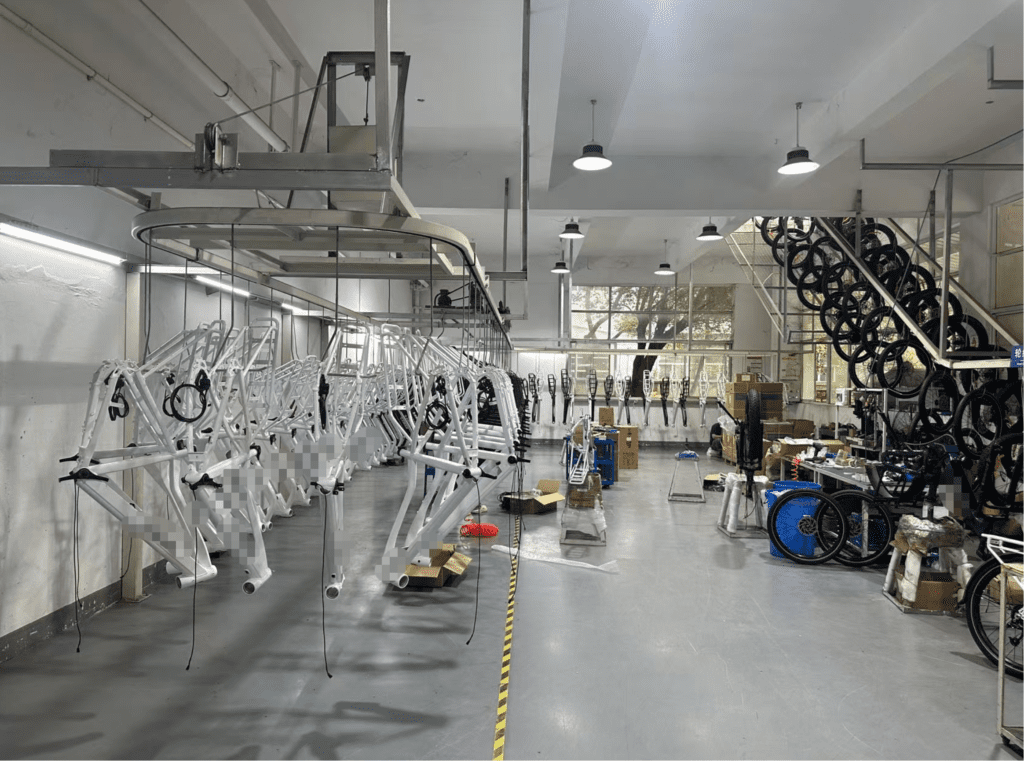
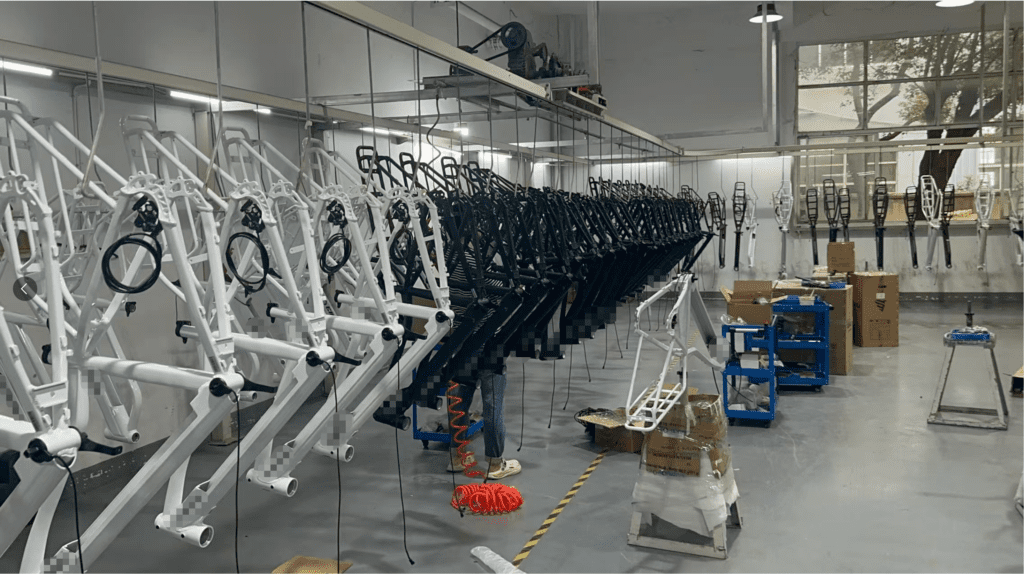
In real OEM manufacturing, safety compliance is usually handled in layers:
- Cell selection (brand + certification level)
- Battery pack assembly (UL 2271 alignment)
- System integration testing (UL 2849 for US market)
- Transport certification (UN 38.3)
- Final product testing (EN 15194 or equivalent)
Each layer reduces risk at a different stage of the product lifecycle.
7. Common misunderstanding in the market
There are several frequent misunderstandings among new importers:
- “Battery is certified, so the whole bike is safe”
- “Motor wattage determines compliance”
- “Certification is only needed for customs clearance”
- “EU and US standards are interchangeable”
In reality, compliance is market-specific and system-dependent.
8. Summary
Electric bike safety standards are not a single requirement, but a set of overlapping systems depending on:
- Market (US / EU / global shipping)
- Product type (commuter / cargo / folding / fat tire)
- Electrical architecture (voltage, controller design, battery type)
For OEM buyers and distributors, understanding these standards early in product selection helps avoid redesign costs and import delays later in the supply chain.

Leave a Reply