When people talk about an e-bike, they usually focus on the frame, battery range, motor power, or appearance. But an electric bike is actually a combination of many different components working together.
For manufacturers, wholesalers, dealers, and distributors, understanding these e-bike parts is important because component selection has a direct impact on riding performance, reliability, cost, and after-sales service.
A 750W motor with a poor controller, for example, may not perform as expected. Likewise, a large-capacity battery does not automatically mean better range if the motor, controller, tires, and riding conditions are not properly matched.
This guide explains the main electric bike components and what buyers should look for when sourcing e-bike parts.
1. E-Bike Motor
The motor is one of the most important components of an electric bicycle. It determines how the bike accelerates, climbs hills, and performs under load.
There are two main types of e-bike motors: hub motors and mid-drive motors.
Hub Motor
A hub motor is installed directly inside the front or rear wheel hub.
Rear hub motors are especially common on commuter and fat tire e-bikes because they are relatively simple, reliable, and cost-effective.
Typical advantages include:
- Simple mechanical structure
- Lower manufacturing cost
- Easy maintenance
- Good performance for commuting
- Suitable for many OEM e-bike projects
For example, a 500W or 750W rear hub motor can provide enough power for daily commuting and moderate hills.
However, hub motors can be less efficient than mid-drive systems when riding on steep hills, particularly when the bike is heavily loaded.
Mid-Drive Motor
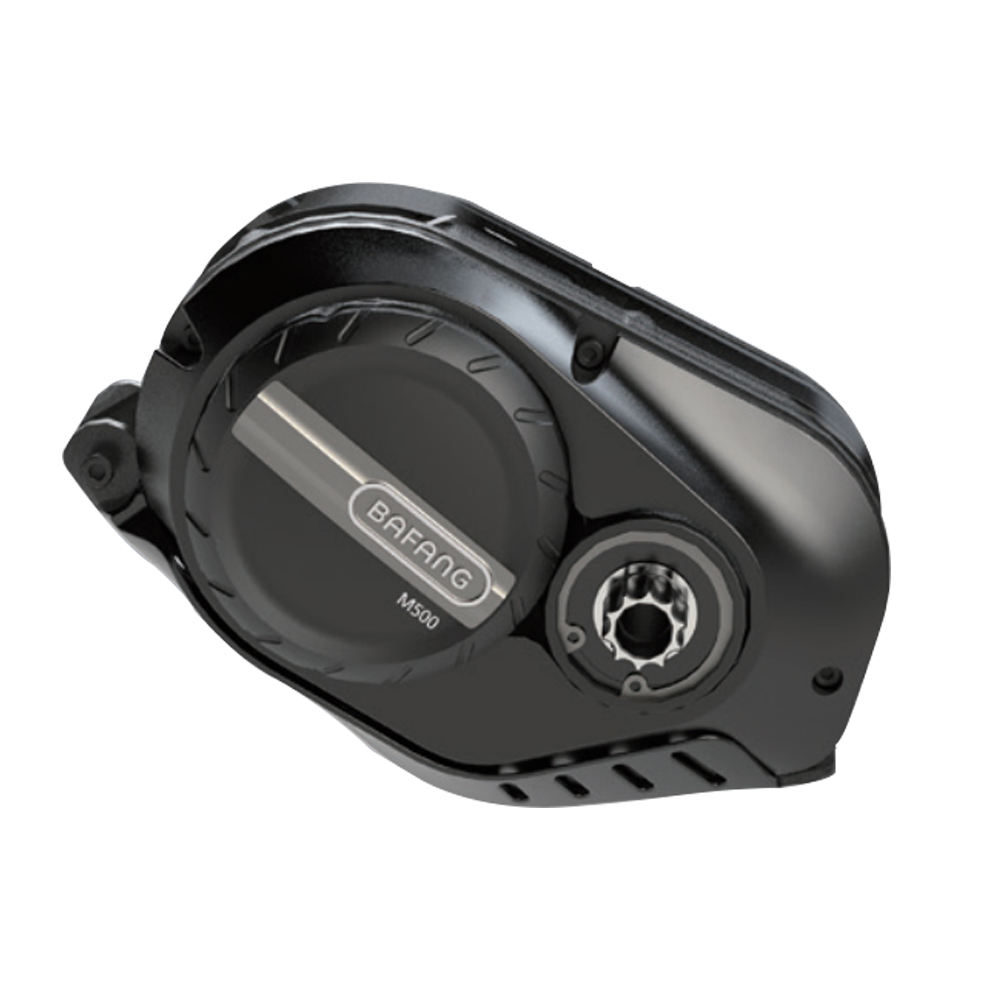
A mid-drive motor is installed around the bicycle’s bottom bracket and drives the crank.
Instead of directly turning the wheel, the motor works through the bicycle’s drivetrain.
This design has several advantages:
- Better climbing performance
- More balanced weight distribution
- Efficient power delivery
- Better performance on steep terrain
- Suitable for mountain and performance e-bikes
Mid-drive motors are more complicated and usually more expensive than hub motors. They also place more stress on the chain, cassette, and other drivetrain components.
For OEM and ODM projects, choosing between hub drive and mid-drive should depend on the intended market and riding conditions rather than simply choosing the motor with the highest wattage.
2. E-Bike Battery
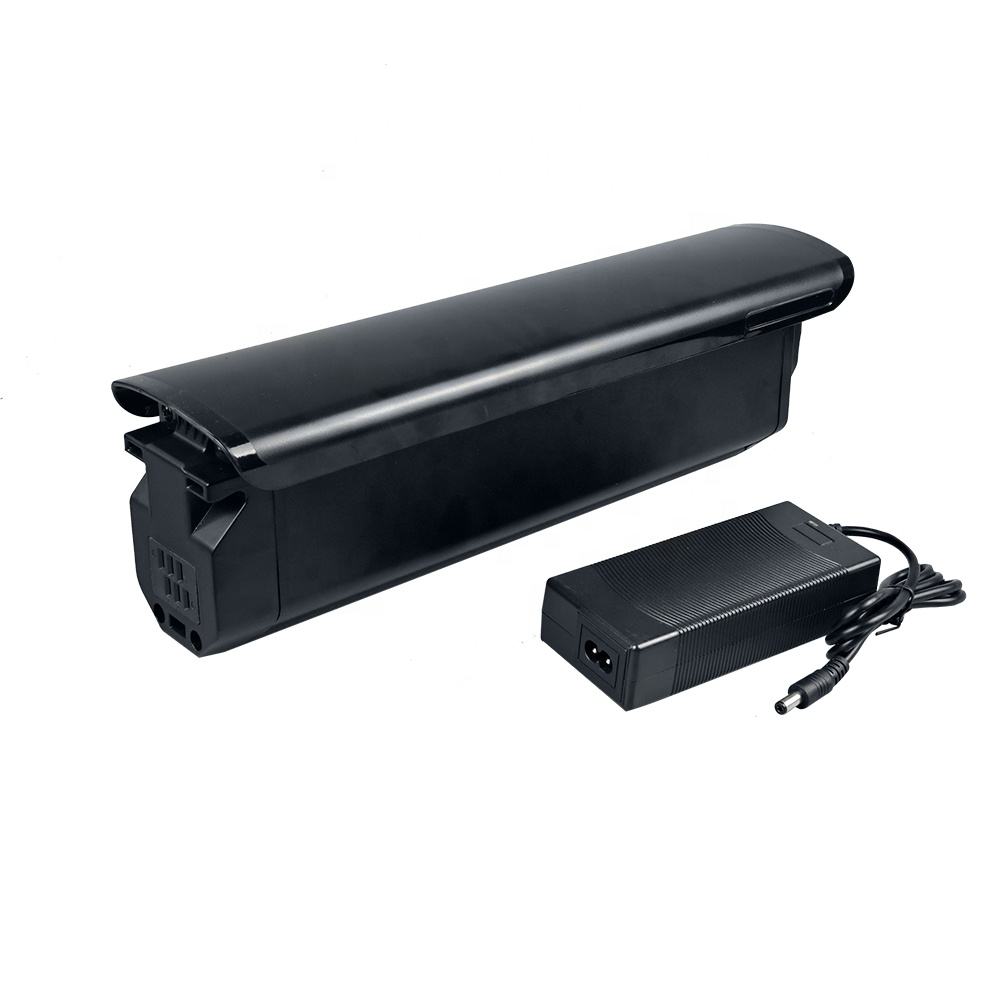
The battery is another major component of an electric bicycle.
Battery capacity is normally expressed in Wh (watt-hours).
A simple calculation is:
Voltage × Amp-hours = Watt-hours
For example:
A 48V 20Ah battery has approximately:
48 × 20 = 960Wh
This gives buyers a much better idea of battery capacity than looking at Ah alone.
Common E-Bike Battery Voltages
You will commonly see:
- 36V
- 48V
- 52V
- 60V
- 72V
48V has become particularly common in many performance and commuter e-bike applications.
However, higher voltage does not automatically mean better performance. The motor, controller, battery management system, charger, and wiring all need to be compatible.
Battery Cells
The quality of the battery cells also matters.
Common lithium-ion cell manufacturers include companies such as Samsung, LG, Panasonic, and other established cell suppliers.
When purchasing an e-bike battery, buyers should consider more than capacity.
Important specifications include:
- Cell brand
- Cell chemistry
- Voltage
- Capacity
- Maximum continuous discharge current
- BMS specification
- Charger
- Battery certification
- Cycle life
- Operating temperature
For international e-bike sales, battery compliance is particularly important because lithium batteries are subject to transportation and safety requirements.
3. Battery Management System (BMS)
The BMS is a small but extremely important part of an e-bike battery.
It monitors and protects the battery pack.
A good BMS can help protect against:
- Overcharging
- Over-discharging
- Over-current
- Short circuits
- Excessive temperature
- Cell imbalance
When comparing two batteries with the same 48V 20Ah specification, the internal BMS and cell configuration can still be completely different.
This is one reason why simply comparing battery capacity is not enough when sourcing electric bike parts.
4. E-Bike Controller
The controller is essentially the communication center between the battery and motor.
It controls how electrical power is delivered to the motor.
The controller affects:
- Acceleration
- Motor response
- Maximum current
- Top assisted speed
- Regenerative braking, if supported
- Protection functions
- Overall riding feel
For example, two e-bikes can use the same 750W motor but feel completely different because they use different controllers.
When matching a controller with a motor, manufacturers need to consider:
Voltage + current + motor compatibility + communication protocol + connector configuration.
A controller that is not correctly matched can cause overheating, poor acceleration, error codes, or even component failure.
5. E-Bike Display
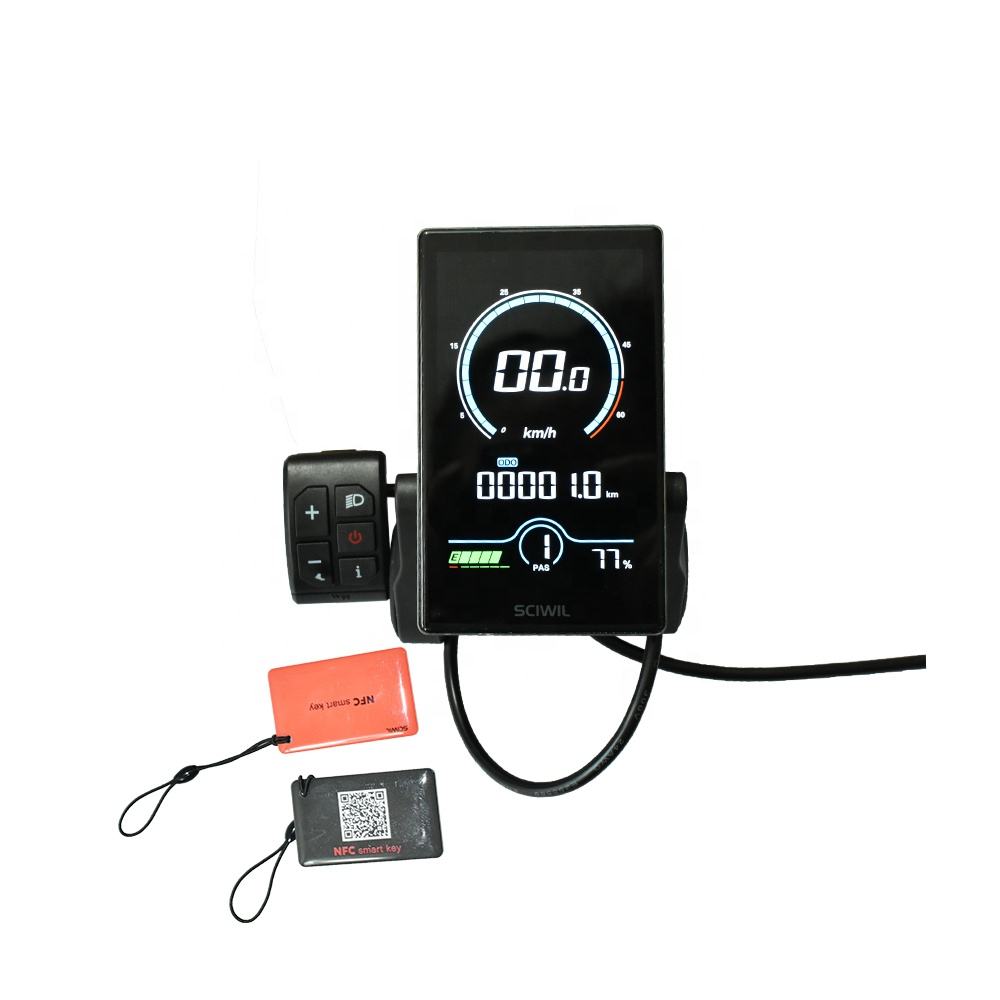
The display is the interface between the rider and the electrical system.
Depending on the model, it may show:
- Battery level
- Speed
- Riding mode
- Trip distance
- Total mileage
- Motor output
- Error codes
- Voltage
- Current
Basic commuter e-bikes often use simple LCD displays.
Higher-end models may use color displays with Bluetooth, USB charging, smartphone connectivity, or app integration.
For OEM customers, the display is also an important branding opportunity because the user interacts with it every time they ride the bike.
6. E-Bike PAS Sensor
The pedal assist sensor, commonly called PAS, detects when the rider is pedaling.
There are two common approaches:
Cadence Sensor
A cadence sensor detects whether the crank is rotating.
It is relatively inexpensive and widely used on entry-level and mid-range e-bikes.
Torque Sensor
A torque sensor measures how much force the rider is applying to the pedals.
The motor can then provide assistance based on the rider’s input.
Torque sensors generally provide a more natural riding experience, especially for riders who want the bike to feel closer to a traditional bicycle.
This is one reason why torque sensors are becoming more common on premium commuter and performance e-bikes.
7. E-Bike Gearing and Derailleur
The drivetrain determines how efficiently the rider can transfer power to the rear wheel.
Common components include:
- Chain
- Crankset
- Cassette
- Freewheel
- Rear derailleur
- Shifter
- Chainring
Shimano and SRAM are two of the best-known drivetrain brands in the bicycle industry, although many other manufacturers supply components for OEM electric bikes.
For a normal commuter e-bike, a simple 7-speed or 8-speed system may be enough.
Mountain and performance e-bikes may use 9, 10, 11, or 12-speed systems.
However, more gears do not necessarily mean a better e-bike.
For high-torque mid-drive e-bikes, drivetrain durability can actually be more important than the number of gears.
8. E-Bike Brakes
Braking performance is particularly important on electric bicycles because an e-bike is generally heavier and can travel faster than a traditional bicycle.
There are two main types:
Mechanical Disc Brakes
Mechanical brakes use a cable to operate the brake caliper.
They are:
- Affordable
- Easy to maintain
- Simple to repair
They are commonly found on entry-level e-bikes.
Hydraulic Disc Brakes
Hydraulic brakes use hydraulic fluid to transmit braking force.
They generally provide:
- Stronger braking
- Better modulation
- Less hand effort
- Better performance on hills
- Better performance under heavy loads
For heavier fat tire e-bikes, mountain e-bikes, and high-power models, hydraulic disc brakes are generally a better choice.
Brake rotor size also matters.
Common sizes include:
- 160mm
- 180mm
- 203mm
A larger rotor can provide better heat dissipation and braking performance, although the complete braking system needs to be properly matched.
9. E-Bike Tires
Tires have a surprisingly large impact on riding performance.
Different e-bike applications require different tire designs.
City E-Bike Tires
Usually prioritize:
- Low rolling resistance
- Comfort
- Puncture protection
- Road grip
Fat Tire E-Bikes
4.0-inch fat tires are common on hunting, off-road, beach, and recreational e-bikes.
They provide additional traction and cushioning but also increase rolling resistance.
Mountain E-Bike Tires
Mountain bikes normally use tires with more aggressive tread patterns for loose surfaces, dirt, rocks, and trails.
When choosing tires, buyers should consider not only size but also:
tread pattern + casing + rubber compound + puncture protection + load rating.
10. E-Bike Wheels and Rims
Wheel size affects handling, acceleration, comfort, and stability.
Common e-bike wheel sizes include:
- 20 inch
- 24 inch
- 26 inch
- 27.5 inch
- 29 inch
For example, 27.5-inch and 29-inch wheels are common on electric mountain bikes, while 20-inch wheels are often used on folding and compact e-bikes.
For heavy e-bikes, wheel strength is particularly important.
A high-power motor combined with a heavy rider and large battery places considerably more stress on spokes and rims than a traditional bicycle.
11. E-Bike Charger
The charger is often overlooked when buyers compare e-bike components.
But the charger needs to match the battery voltage and charging requirements.
For example, a typical lithium battery labeled as 48V does not use a 48V charger. The charger’s output voltage is higher because the battery needs to reach its full charging voltage.
Common charger ratings include:
- 2A
- 3A
- 4A
- 5A
A higher-current charger can reduce charging time, but it must be compatible with the battery and BMS.
For OEM projects, charging speed, connector type, certifications, and regional electrical standards should all be considered.
12. E-Bike Wiring and Connectors
Wiring is not a glamorous part of an e-bike, but poor wiring can cause serious problems.
Important considerations include:
- Wire gauge
- Connector quality
- Waterproofing
- Current capacity
- Heat resistance
- Cable routing
- Connector compatibility
For outdoor and off-road e-bikes, waterproof connectors are especially important.
A high-power motor may draw significant current, so using undersized wires or low-quality connectors can create resistance and heat.
13. E-Bike Lights
Front and rear lights are standard components on most modern e-bikes.
Depending on the market, the system may include:
- Front LED headlight
- Rear light
- Brake light
- Turn signals
- Reflectors
Some e-bikes power their lights directly from the main battery.
This is convenient because riders do not need to separately charge the lights.
For street-legal models, lighting requirements should always be checked according to the target country’s regulations.
14. Choosing E-Bike Components for an OEM Project
For manufacturers and distributors, selecting components is not simply about finding the cheapest parts.
The components need to work as a complete system.
For example:
Battery → Controller → Motor → Drivetrain → Brakes → Tires
All of these components affect the final riding experience.
A 1,000W motor does not make much sense if the battery cannot supply enough current.
A powerful mid-drive motor also requires a drivetrain capable of handling the additional torque.
Likewise, a heavy 4.0-inch fat tire bike should have a suitable braking system and wheelset.
This is why experienced e-bike manufacturers usually select components as a complete configuration rather than purchasing every part independently.
E-Bike Parts: What Should Buyers Pay Attention To?
If you are a wholesaler, dealer, or brand owner looking for electric bike parts, I recommend focusing on five things.
1. Compatibility
Make sure the motor, battery, controller, display, sensor, and wiring are compatible.
2. Quality
Don’t judge a component only by its appearance or advertised specifications.
3. Certification
For international markets, check the relevant product and battery certifications before placing an order.
4. Spare Parts
A good supplier should be able to provide replacement controllers, displays, brake components, chargers, sensors, and other common parts.
5. After-Sales Support
This is especially important for distributors.
Even a good e-bike can eventually have a failed sensor, controller, display, brake component, or battery.
Reliable spare-parts supply can make a significant difference to the overall cost of ownership.

Final Thoughts
An e-bike is not just a motor and battery.
The actual riding experience comes from how all the electric bike components work together.
The motor determines power delivery. The battery determines available energy. The controller manages the electrical system. The drivetrain transfers power to the wheel. The brakes control speed and safety, while the tires, wheels, suspension, and frame determine how the bike behaves on different surfaces.
For dealers and OEM buyers, understanding these components makes it easier to compare suppliers and build the right configuration for a specific market.
The best e-bike is not necessarily the one with the biggest motor or largest battery. The better approach is to match each component to the bike’s intended use, target customer, local regulations, and price point.

Leave a Reply