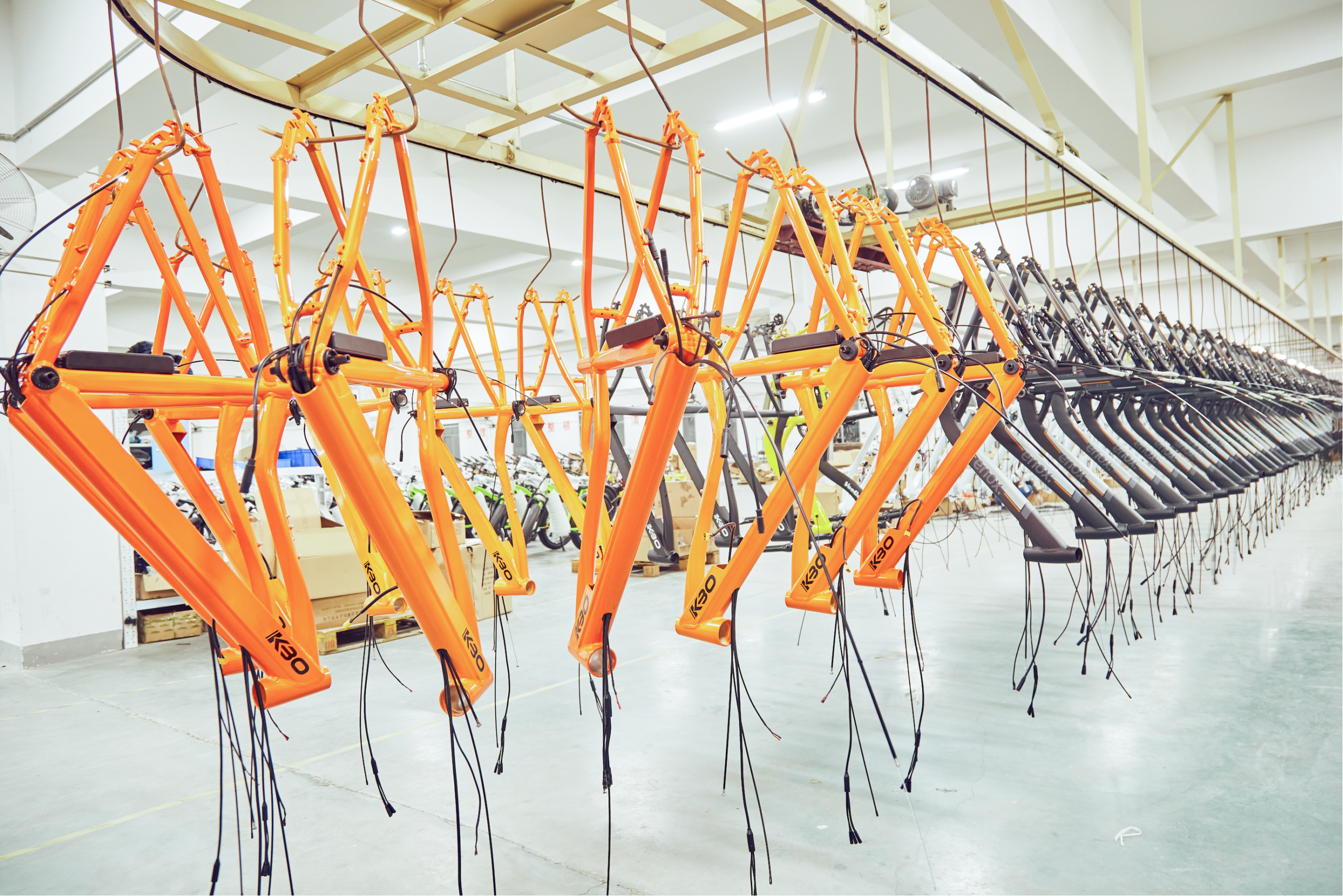
Introduction
In recent years, the demand for electric cargo bikes for delivery has increased significantly, especially in urban logistics and last-mile transportation. With rising fuel costs, stricter emission regulations, and the growth of e-commerce and food delivery platforms, more businesses are looking for efficient and cost-controlled alternatives.
For distributors, fleet operators, and delivery platforms, choosing the right electric bike manufacturer is not just about product pricing—it is about reliability, customization capability, and long-term operational support.
This article explains how electric cargo bikes are designed and manufactured for delivery use, and what B2B buyers should consider when selecting an OEM partner.
Why Electric Cargo Bikes Are Growing in the Delivery Market
According to multiple industry reports, the global e-bike market is expected to continue growing steadily, driven by urban mobility needs and environmental policies. In North America and Europe, cargo e-bikes are increasingly used for food delivery, parcel distribution, and local logistics.
Compared to traditional motorcycles or vans, electric cargo bikes offer:
- Lower operating costs
- No fuel dependency
- Easier urban access
- Reduced maintenance
For delivery fleets, this translates into higher efficiency and lower long-term cost per order.
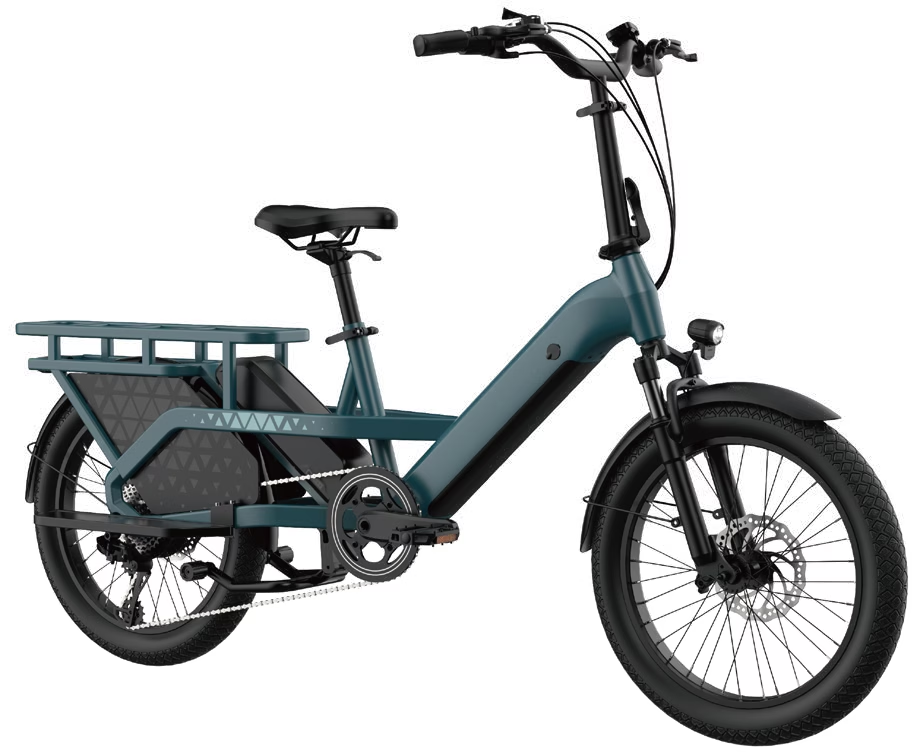
Key Requirements for Delivery Cargo E-Bikes
Not all e-bikes are suitable for delivery. From a manufacturing perspective, cargo bikes used in commercial scenarios must meet several key requirements:
1. Long Battery Range
Delivery riders often operate for 6–10 hours per day. A typical configuration includes:
- 48V battery systems
- 15Ah–20Ah capacity (or dual battery options)
- Range: approximately 60–100 km depending on load and terrain
This ensures fewer charging interruptions during working hours.
2. Durable Frame Structure
Unlike consumer bikes, delivery cargo bikes are exposed to:
- Heavy loads
- Frequent stops
- Rough road conditions
Manufacturers usually adopt:
- Reinforced aluminum alloy frames
- Integrated cargo racks (rear or front)
- Load capacity: typically 120–200 kg
Durability directly impacts fleet maintenance costs.
3. Cargo-Oriented Design
Cargo bikes are designed with practical use in mind:
- Extended rear racks for delivery boxes
- Front basket or platform options
- Compatibility with insulated food delivery boxes
Some OEM projects also include custom mounting systems for specific delivery platforms.
4. Easy Maintenance
For fleet operators, downtime equals loss.
A well-designed cargo e-bike should include:
- Modular electrical systems
- Standardized components
- Easy access to battery and controller
This allows faster repair and replacement.
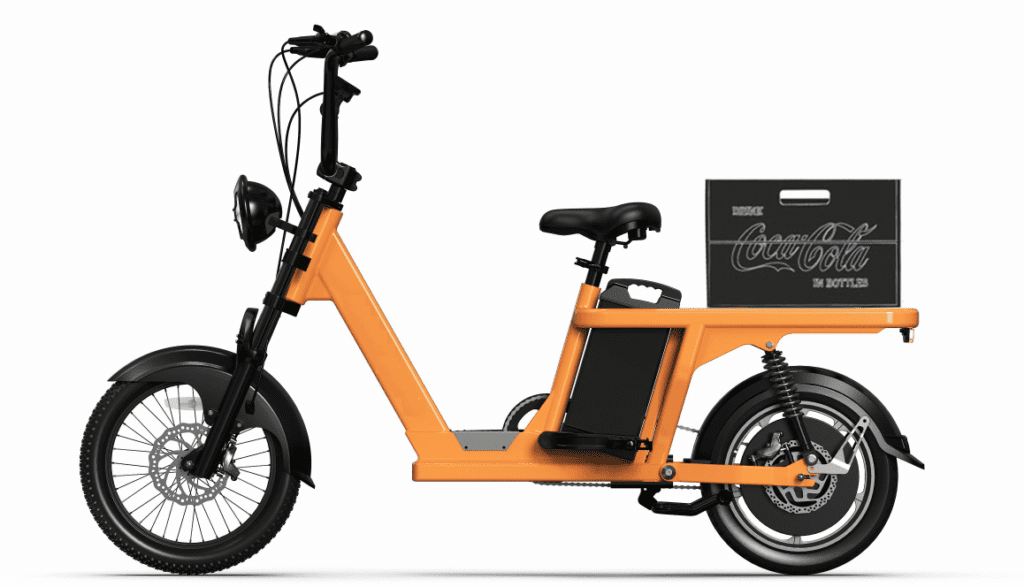
Electric Cargo Bike OEM Manufacturing Process
Understanding the electric bike OEM manufacturing process helps buyers evaluate suppliers more effectively.
Step 1: Model Selection
Buyers typically start by selecting a base cargo bike model depending on their market:
- Food delivery
- Parcel logistics
- Rental fleets
Step 2: Customization
Customization is a key part of OEM manufacturing. This may include:
- Motor power (250W / 500W / 750W)
- Battery capacity
- Frame color and branding
- Logo and packaging
For many B2B buyers, small batch flexibility (30–200 units) is important for market testing.
Step 3: Sample Testing
Before bulk production, samples are produced for:
- Performance testing
- Compliance checks
- Market validation
This stage is critical, especially for new distributors.
Step 4: Mass Production
Once confirmed, production begins with:
- Frame assembly
- Electrical system installation
- Quality inspection
Factories with stable supply chains can ensure consistent output.
Step 5: Shipping and Delivery
For international buyers, shipping options include:
- Full container load (FCL)
- Mixed model containers
- DDP or FOB terms
Step 6: After-Sales Support
Reliable manufacturers provide:
- Spare parts supply
- Technical support
- Overseas warehouse support
This is often a deciding factor for long-term cooperation.
Manufacturing Advantages for B2B Buyers
For distributors and fleet operators, working with an experienced electric bike manufacturer offers several practical advantages.
Flexible MOQ for Market Testing
Instead of large initial investments, many factories now support:
- 30–200 units per model
This helps buyers test local markets with lower risk.
Dual Production Base (China & Vietnam)
Manufacturing in both China and Vietnam allows:
- Cost optimization
- Supply chain stability
- Better control over production timelines
Overseas Warehouse Support
Spare parts warehouses in the US and Europe enable:
- Faster delivery of components
- Reduced downtime for fleets
- Better customer satisfaction
Certification Compliance
For regulated markets, compliance is essential.
Typical standards include:
- UL 2849 for North America
- CE EN 15194 for Europe
These certifications ensure the bikes meet safety and legal requirements.
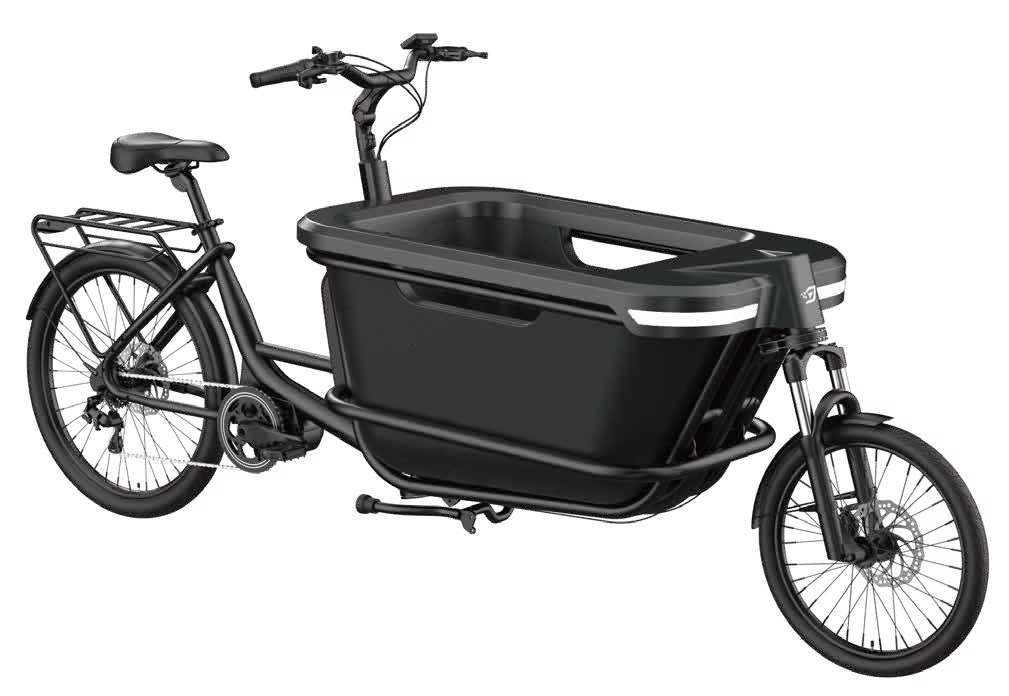
Real-World Applications
Electric cargo bikes are already widely used in:
Food Delivery Platforms
- Uber Eats / DoorDash-type operations
- High-frequency short-distance delivery
Local Logistics Fleets
- Parcel delivery in urban areas
- Last-mile distribution
Rental and Sharing Businesses
- Short-term rental fleets
- Tourism or city mobility solutions
What B2B Buyers Should Focus On
Based on industry experience, buyers should prioritize:
- Reliability over lowest price
- After-sales support capability
- Customization flexibility
- Compliance with local regulations
Choosing the right supplier is not only about the first order, but also about long-term scalability.
Conclusion
Electric cargo bikes are becoming a practical solution for modern delivery businesses. Their efficiency, cost advantages, and adaptability make them suitable for a wide range of commercial applications.
For B2B buyers, working with a capable electric bike manufacturer means more than just sourcing products—it is about building a stable supply chain that supports growth.
With flexible OEM solutions, customizable designs, and global support systems, cargo e-bikes can be effectively integrated into delivery operations across different markets.
Call to Action
If you are looking to develop or expand your delivery fleet with electric cargo bikes, it is recommended to start with sample testing and evaluate customization options based on your market needs.
For more details on models and specifications, you can explore our cargo e-bike solutions or contact us for further discussion.

Leave a Reply