
Urban transportation is not getting easier. Traffic congestion, rising fuel costs, limited parking, and stricter low-emission regulations are forcing cities and businesses to rethink how people move.
For many B2B buyers—bike dealers, fleet operators, delivery companies, and OEM brand owners—the question is no longer “what is the best ebike?” but rather:
Which ebike actually works in real urban operations without breaking down cost, service, or user experience?
This article breaks down best ebikes for urban transportation from a practical, industry-first perspective—not marketing.

Why Most “Urban Ebikes” Fail in Real City Use
On paper, many ebikes look suitable for cities. In reality, a large percentage fail within 3–6 months of daily use in commercial environments.
Common problems include:
- Battery degradation under frequent charging cycles
- Weak torque for stop-and-go traffic
- Poor waterproofing (especially for delivery fleets)
- Over-complicated electronics that increase repair cost
- Inconsistent spare parts supply chain
- Frames not designed for heavy daily use
For B2B buyers, downtime is more expensive than the bike itself.
So the real question becomes: what defines a good urban transportation ebike?
Key Requirements for Urban Transportation Ebikes
From a manufacturing and fleet operation perspective, a reliable urban ebike should meet these core conditions:
1. Torque for Stop-and-Go Traffic
Urban riding is not steady cruising. It is constant braking and acceleration.
- Minimum recommended: 55–85 Nm torque
- Better for fleets: mid-drive or high-efficiency hub motor with torque sensor
2. Battery Efficiency Over Maximum Range
Many buyers over-focus on range. In cities, the real metric is:
cycles per day + charging stability
- 48V 12Ah–20Ah is the practical sweet spot
- Battery should support fast charging and 800+ cycles
- Modular battery design improves fleet uptime
3. Low Maintenance Drivetrain
Chains and derailleurs often fail under heavy usage.
Better options:
- Internal gear hub (for fleets)
- Reinforced chain + Shimano mid-level groupset (for cost control)
4. Waterproof and Dust Protection
Urban ebikes often operate in mixed weather conditions.
Minimum requirements:
- IPX4–IPX6 level sealing
- Waterproof display and controller housing
- Protected battery interface design
5. Frame Designed for Commercial Use
Urban transport bikes are not lifestyle products.
Key requirements:
- Reinforced aluminum alloy frame (6061 preferred)
- Step-through or low-step geometry for delivery riders
- Rear rack integration for cargo use
Best Ebike Types for Urban Transportation (Industry View)
Instead of focusing on brands, B2B buyers should focus on use-case categories.
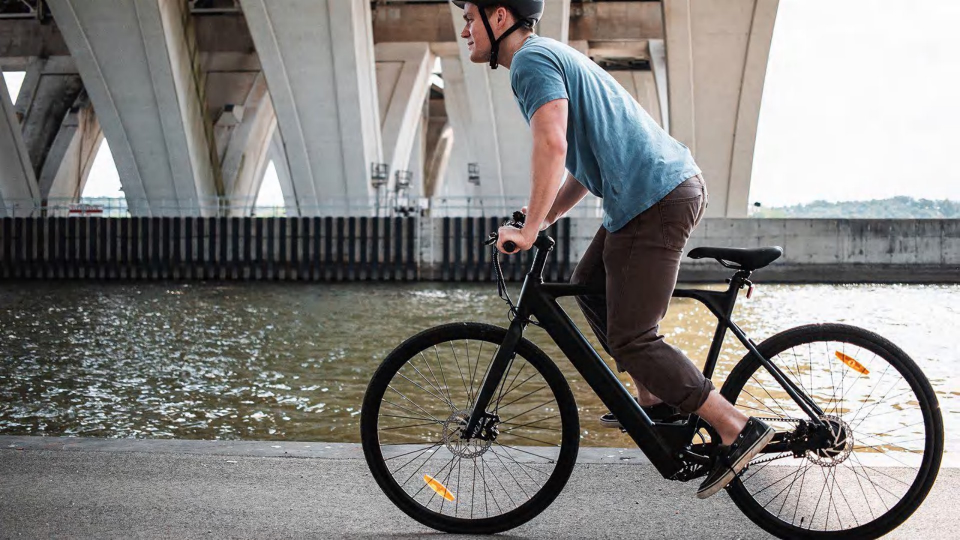
1. City Commuter Ebikes (Most Balanced Segment)
Best for: daily commuting, rental systems, office workers
Key features:
- 250W–500W motor (EU compliance)
- Lightweight frame
- 40–80 km real-world range
- Integrated lighting and fenders
This category dominates European urban markets due to regulation compliance and cost efficiency.
2. Cargo / Delivery Ebikes (Fastest Growing Segment)
Best for: logistics, food delivery, courier fleets
Key features:
- High torque (70–120 Nm)
- Reinforced rear rack or front cargo box
- 48V–52V high-capacity battery
- Strong braking system (hydraulic disc brakes required)
This segment is growing fastest in the US last-mile delivery market.
3. Fat Tire Urban Utility Ebikes
Best for: mixed terrain cities, suburbs, utility fleets
Key features:
- 4.0” fat tires for stability
- Higher weight tolerance
- Strong suspension system
- Weather-resistant components
These are increasingly used by municipal services and security patrols.
The Real B2B Issue: Not Product Choice, But Supply Stability
Most failed ebike programs are not caused by product design—but by:
- unstable OEM supply chains
- inconsistent BOM across batches
- lack of spare parts system
- no after-sales structure in destination markets
For B2B buyers, a “best ebike” is not just a model—it is a supply system.
A reliable urban transportation solution must include:
- stable OEM/ODM production line
- controlled component sourcing (motor, battery, brakes)
- warehouse support in target regions
- repairable modular design
- standardized SKD/CKD shipping options
Many importers entering the urban mobility market quickly realize that product quality alone is not enough; what they really need is a stable urban commuter ebike supplier that can guarantee consistent BOM, spare parts availability, and predictable delivery cycles for fleet operations.
How Smart Buyers Evaluate Urban Ebike Manufacturers
Instead of asking for catalogs, experienced B2B buyers usually ask:
- Can you lock BOM for 12–24 months?
- Do you support private label customization?
- Do you have US/EU warehouse inventory?
- Can spare parts be shipped within 72 hours?
- What is your warranty handling system locally?
These questions matter more than specs.
Final Thoughts: “Best Ebike” Depends on the Business Model
There is no universal best ebike for urban transportation.
But there is a best system depending on your market:
- For EU compliance markets → lightweight commuter ebikes
- For US delivery economy → high torque cargo ebikes
- For mixed-use fleets → modular utility platforms
The real advantage in 2026 is not product design alone—it is OEM capability + supply chain control + fleet adaptability.

Leave a Reply