If you are thinking about how to become an ebike distributor, the first thing I would say is that buying a few electric bikes and putting them on a website is not really a distribution business.
I have seen many new businesses start with the same idea. They find a bike they like, ask for a price, build a website, and then start looking for customers.
Sometimes it works. Quite often, it does not.
The difficult part is not finding an electric bike. There are plenty of them. The difficult part is finding the right product, understanding your market, controlling your costs, and having a supplier that can support you when something goes wrong.
If I were starting an ebike distribution business today, these are the things I would look at first.
Start With Your Local Market
Before contacting a factory, I would spend some time looking at the market where I actually plan to sell.
Electric bikes can look very different from one market to another.
In some places, customers want lightweight commuter bikes. In other markets, fat tire bikes and powerful motors are more popular. Some customers care about long range, while others care more about price, comfort, or appearance.
Local regulations are also important.
You need to understand the requirements for motor power, speed limits, batteries, labeling, certifications and road use in your target market.
This is one area where new distributors sometimes make a mistake. They find a popular bike from another country and assume it will sell in their own market.
That is not always the case.
Decide What Kind of Distributor You Want to Be
There are several ways to enter the ebike business.
You can distribute an existing brand, import bikes under your own brand, sell through dealers, operate an online store, or combine several of these models.
For someone starting from zero, I would not try to do everything at once.
A smaller product range is usually easier to manage.
For example, you might start with three models:
- A comfortable city commuter
- A more powerful SUV-style ebike
- A long-range or utility model
This gives customers some choice without creating a huge inventory problem.
It also makes it easier to understand which product is actually selling.
Find a Reliable Ebike Wholesale Supplier
Once you understand your market, the next step is finding a reliable ebike wholesale supplier.
Price is obviously important, but I would not choose a factory simply because it gives you the lowest quotation.
There are other questions that are more important in the long run.
Can they provide replacement parts?
Can they communicate clearly?
Can they handle quality problems?
Can they customize the bikes?
Can they provide the certifications required in your market?
Can they maintain the same specifications when you reorder six months later?
These things may not matter when you are buying your first 10 bikes. They become very important when you have 100 customers.
Think About Your Brand From the Beginning
If you want to build a long-term business, you may eventually want your own brand.
This does not necessarily mean developing a completely new bicycle from scratch.
Many distributors start with an existing frame or platform and customize important details such as colors, logos, decals, components, batteries, displays and packaging.
Working with a custom ebike manufacturer can make this process much easier.
You can start with an existing platform and gradually develop your own product instead of spending a huge amount of money creating everything from zero.
For some businesses, this is a more practical way to enter the market.
Calculate the Real Cost
One of the biggest mistakes I see is looking only at the factory price.
If a bike costs $600 from the factory, that does not mean your cost is $600.
You also need to consider:
- International freight
- Import duties and taxes
- Customs clearance
- Local transportation
- Warehouse costs
- Assembly or preparation
- Spare parts
- Warranty costs
- Marketing
- Payment fees
- Returns and damaged shipments
The final number is what matters.
I would recommend making a simple spreadsheet before placing an order. Put every expected cost into it and calculate the actual landed cost of one bike.
Then work backward from the retail price.
That gives you a much better idea of whether the business makes sense.
Do Not Buy Too Many Models at the Start
It can be tempting to order many different bikes because a factory has a large catalog.
I would be careful with this.
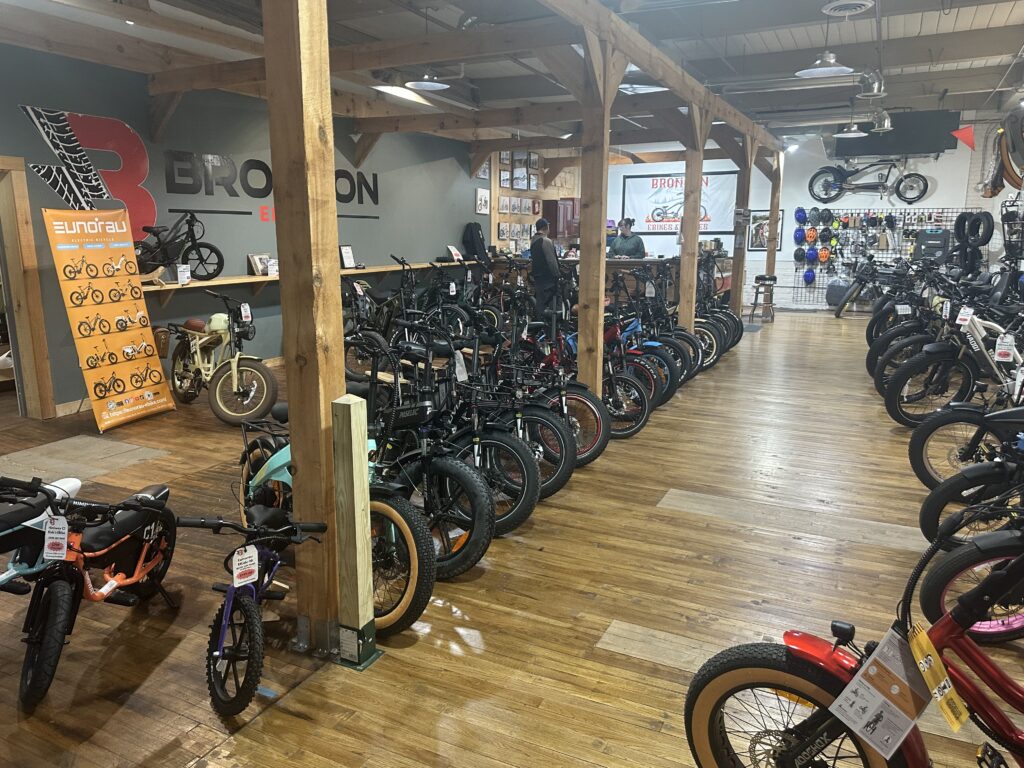
Every additional model means another set of spare parts, product photos, specifications, inventory and customer questions.
If you have 15 models but only sell two of them regularly, the other bikes are simply tying up your money.
Starting with a smaller selection gives you time to learn what your customers actually want.
You can always add more models later.
Consider Custom Electric Bikes
There is another route that can make sense for distributors who already understand their customers.
Instead of selling exactly the same product as dozens of other companies, you can develop custom electric bikes with a factory.
The customization does not have to be extreme.
Sometimes changing the frame color, branding, battery capacity, tires, rack, fenders or other components is enough to create a product that feels different from the standard catalog model.
For a growing distributor, this can also make price comparison more difficult because customers cannot simply search for the exact same model somewhere else.
Build a Relationship With the Factory
A good supplier relationship becomes more valuable as your business grows.
At the beginning, you may only be discussing prices and specifications.
Later, you may need help with replacement parts, warranty claims, production schedules, packaging changes or new products.
This is why I think choosing an electric bike OEM manufacturer should be about more than the first quotation.
Communication matters.
If you cannot get a clear answer when you are trying to place an order, imagine how difficult it will be when you have customers waiting for replacement parts.
Think About After-Sales Service
Selling the bike is only the beginning.
Electric bikes contain motors, batteries, controllers, displays, brakes and other components. Eventually, something will need to be replaced.
A distributor needs a plan for this.
You should know which parts are commonly replaced and how quickly you can get them.
You should also understand the warranty policy before selling the bikes to your customers.
A customer does not care that a problem happened somewhere between the factory and the distributor. They bought the bike from you, so they expect you to help solve the problem.
Good after-sales service can therefore become one of your biggest advantages.
Decide Whether You Need a Warehouse
You do not necessarily need a large warehouse on day one.
Some distributors begin with a small inventory and increase stock after they understand their sales volume.
Others work with local warehouses or third-party logistics companies.
The right choice depends on your market and business model.
If customers expect fast delivery, keeping stock locally can make a big difference. If your customers are willing to wait, importing after receiving orders may reduce your inventory risk.
There is no single answer that works for every distributor.
Look at Dealer Opportunities
If you eventually want to build a larger distribution business, working with local bicycle shops can be useful.
A dealer can provide something an online store cannot always provide — a physical place where customers can see and test the bike.
This is where ebike dealership opportunities can become interesting.
Instead of trying to sell every bike directly to consumers, you can develop relationships with independent bike shops and smaller retailers.
Of course, dealers need enough margin to make the relationship worthwhile. Your wholesale pricing, warranty support and product availability all become important.
Start Small and Learn
You do not need to build a huge distribution company immediately.
In fact, I think starting smaller can be safer.
Test a few products.
Talk to customers.
Find out which specifications people ask about.
See which bikes generate repeat orders.
Pay attention to warranty issues.
Then use what you learn to improve your next order.
The first shipment is not just inventory. It is also market research.
What I Would Look For in a Factory
If I were choosing a supplier for a new distribution business, my checklist would be fairly simple.
I would want to know:
1. What is their actual production capacity?
A website can say anything. I would rather understand what the factory is actually producing.
2. What is the MOQ?
A large minimum order can create unnecessary risk for a new distributor.
3. Can they provide samples?
A sample gives you a chance to check the bike before committing to a larger order.
4. What certifications are available?
The requirements depend on the market, so this should be discussed before ordering.
5. What is the warranty process?
Do not leave this conversation until after you receive the bikes.
6. Can they provide spare parts?
This becomes increasingly important as your sales volume grows.
7. Can they support customization?
If you want to develop your own brand, this can become an important part of the relationship.
Becoming an Ebike Distributor Is a Long-Term Process
There is no special trick to become an ebike distributor.
The basic process is fairly straightforward.
Understand your market, choose the right products, find a dependable factory, calculate your real costs, test the products, and build a reliable sales and after-sales system.
The part that takes time is learning what your customers actually want.
You may get the first product wrong. You may discover that one model sells much better than another. You may change your battery specification or packaging after the first few orders.
That is normal.
The distributors who stay in the business usually treat those early mistakes as information rather than simply losses.
If you are building an ebike distribution business for the long term, I would focus less on finding the cheapest bike and more on finding a product and supplier that you can still work with after your first 100 bikes are sold.
That is when the real business starts.

Leave a Reply