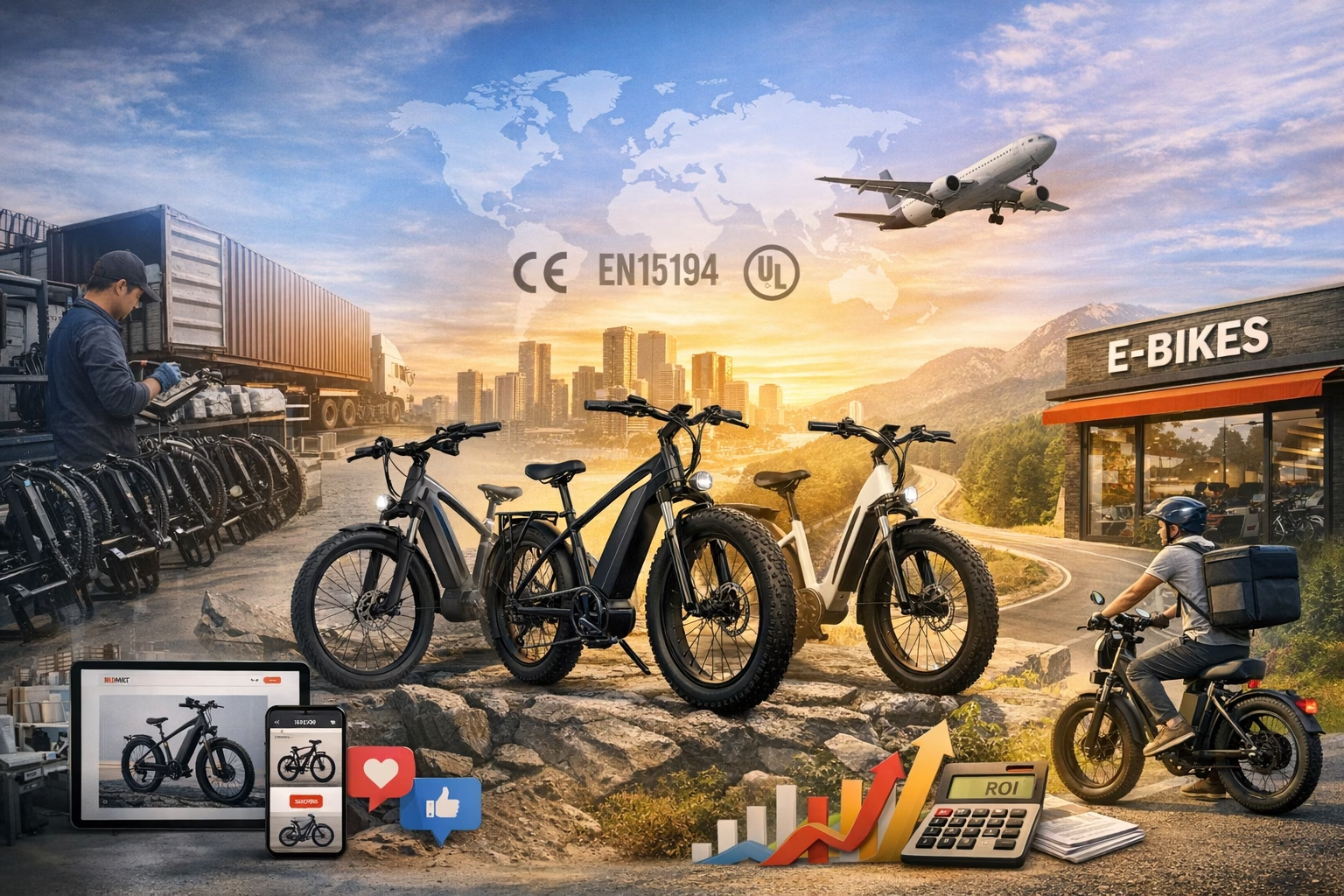
A practical guide based on what actually works
The e-bike industry has changed a lot over the last few years. What worked in 2020 or even 2023 doesn’t automatically work anymore. In 2026, the e-bike business continues to grow rapidly as urban delivery, food logistics, and last-mile transportation expand worldwide, driven by strong demand across the global electric mobility market.
This article is not a theory-based business plan. It’s a practical look at how most successful e-bike businesses actually start today.
1. Decide what kind of e-bike business you want to run
Before thinking about suppliers or pricing, you need to be clear about your business model. This is where many beginners get stuck.
In 2026, most new e-bike businesses fall into one of these categories:
- Brand owner (OEM / private label) You sell under your own brand, with customized models.
- Dealer or distributor You sell existing models in your local market.
- Rental or fleet operator Focused on delivery, tourism, or corporate use.
- Online DTC brand Selling directly through your own website or marketplaces.
Each model requires a very different ebike business plan, especially in terms of budget, inventory, and compliance.
Trying to do everything at once is usually a mistake.
2. Understand your local market before choosing products
A common error is choosing a bike first and then trying to find customers for it.
Instead, start with questions like:
- Who will buy this e-bike?
- Where will it be used—city, suburbs, delivery, leisure?
- What price range actually sells in your market?
For example:
- In Europe, 250W motors and EN 15194 compliance are mandatory.
- In the US, customers care more about range, comfort, and speed.
- For delivery businesses, durability and battery capacity matter more than looks.
The best-selling e-bikes are rarely the most “exciting” ones. They are the ones that solve a clear problem.
3. Build a realistic ebike business plan (numbers matter)
A proper ebike business plan in 2026 should include:
- Target retail price
- Landed cost (bike + shipping + tax)
- Marketing and after-sales cost
- Warranty and spare parts budget
Many first-time founders focus only on factory price. That’s dangerous.
A bike that costs $700 ex-factory might easily land at $1,100–$1,200 by the time it’s ready to sell. If your retail price doesn’t leave room for profit, the business won’t last.
4. Choosing the right ebike manufacturer
Choosing the right experienced e-bike manufacturer is one of the most critical decisions when starting an e-bike business.
When looking for an ebike manufacturer, don’t just ask for price. Ask:
- Do they support OEM customization?
- Can they meet CE / EN / UL requirements?
- Do they have experience with your target market?
- Can they supply spare parts long-term?
A good manufacturer will ask you questions too. If a supplier says “yes” to everything without understanding your market, that’s usually a red flag.
Today, most global brands still rely on an ebike manufacturer in China for scalable production, mature supply chains, and cost efficiency.
In 2026, flexibility and compliance matter more than chasing the lowest price.
5. Start small, but plan for scaling
You don’t need to order 500 bikes to start.
Many successful brands begin with:
- 20–50 units for testing
- One or two core models
- Limited customization (logo, color, battery option)
The goal of your first batch is not to be perfect—it’s to validate demand, collect feedback, and improve the next version.
Scaling is much easier when your supplier already understands your long-term plan.
6. Don’t underestimate regulations and certification
This is especially important if you plan to sell in:
- Europe (CE, EN 15194)
- North America (UL, local state rules)
Certification takes time and money, but skipping it is risky. Many brands fail not because of sales, but because products get blocked, returned, or recalled.
A compliant e-bike is easier to sell, easier to insure, and easier to scale.
7. Marketing: keep it simple and honest
In 2026, customers are tired of exaggerated specs.
What works better:
- Real photos
- Clear use cases
- Honest range estimates
- Transparent warranty terms
Whether you sell online or offline, trust is your strongest asset.
Final thoughts
Starting an e-bike business in 2026 is not about following trends—it’s about building something practical, compliant, and sustainable.
If you:
- Choose the right market
- Work with the right ebike manufacturer
- Start small but think long-term
You’re already ahead of most beginners.
The opportunity is still there—but only for those who approach it the right way.

Leave a Reply