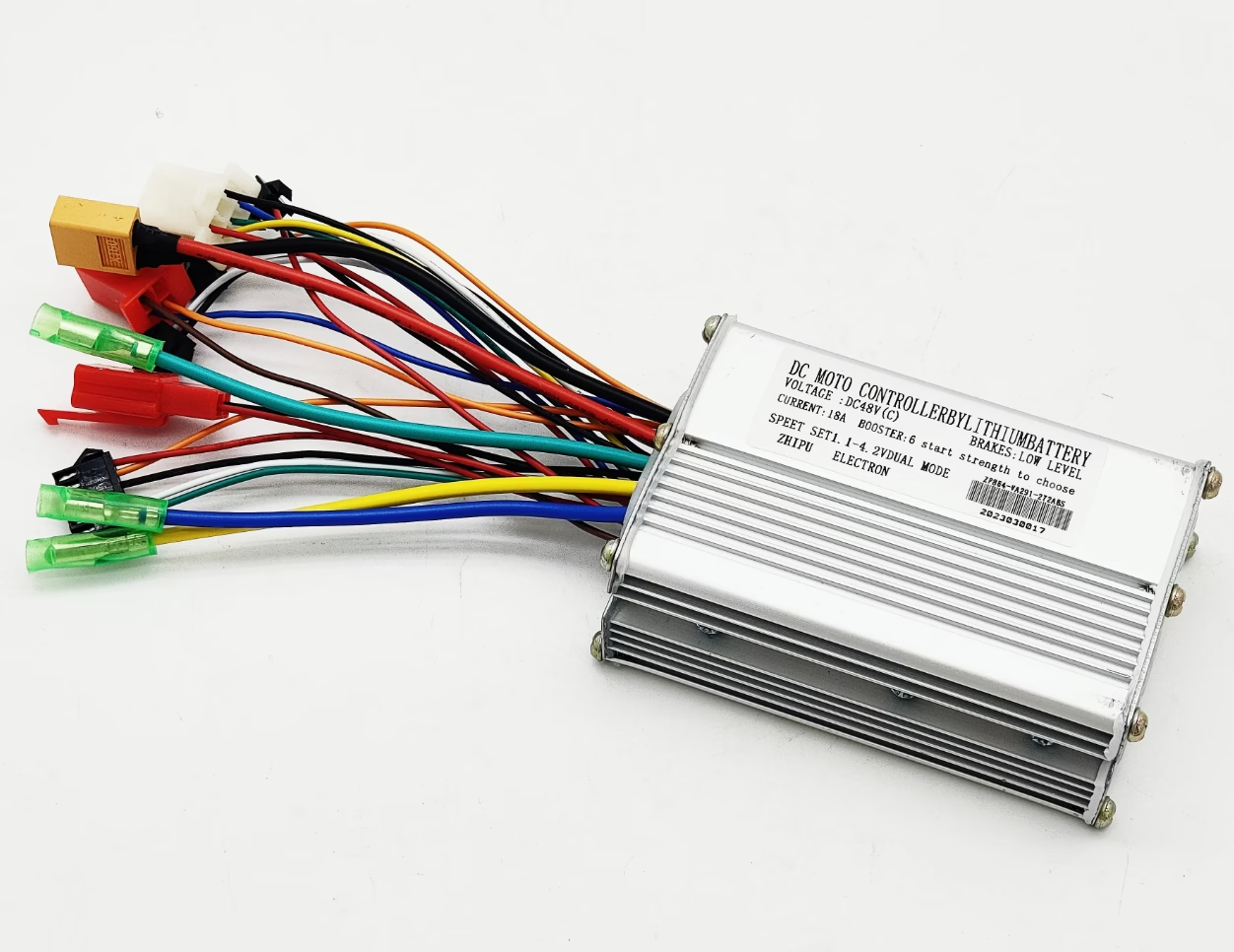
When people talk about e-bikes, most discussions focus on motors, batteries, or range.
However, one critical component is often overlooked — the e-bike controller.
In reality, the controller is the brain of an electric bicycle. It determines how power is delivered, how smooth the ride feels, and how reliable the system is over time.
For brands, dealers, and OEM buyers, understanding the role of the e-bike controller is essential for building competitive and reliable products.
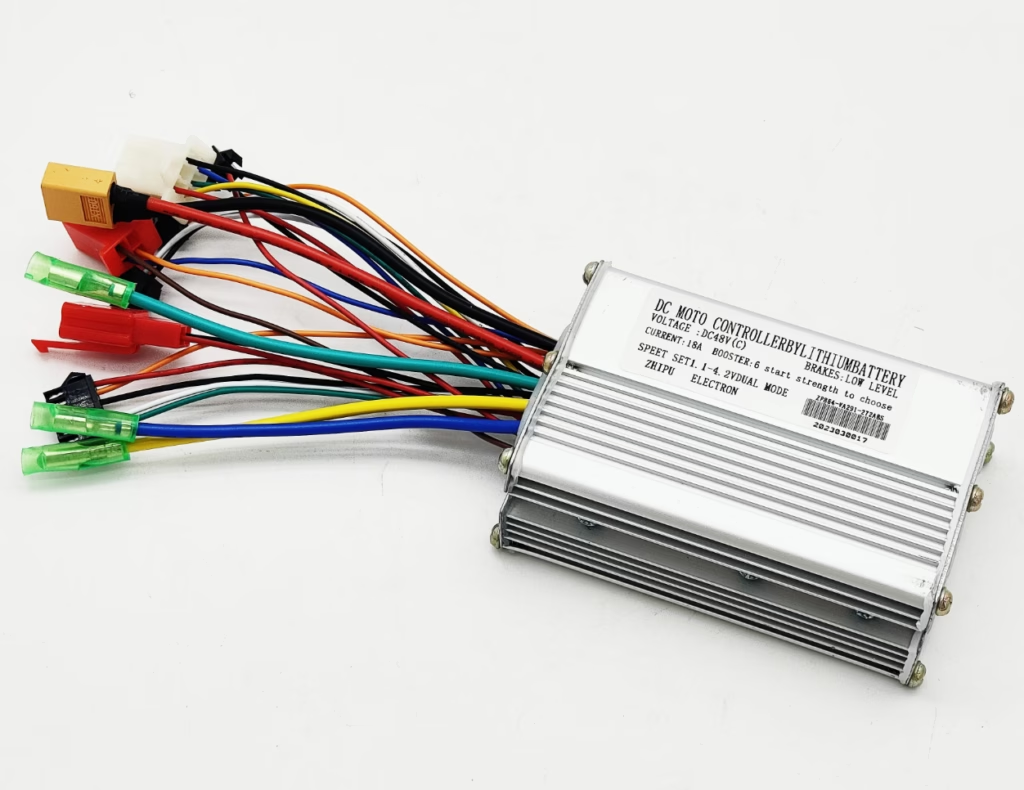
What Does an E-Bike Controller Do?
An e-bike controller manages the flow of electricity between the battery, motor, and sensors.
Its main functions include:
- Regulating motor power output
- Managing pedal assist (PAS) and throttle signals
- Protecting the system from overcurrent, overheating, and short circuits
- Communicating with the display, sensors, and other electronic components
In simple terms, the controller decides how the bike responds when the rider pedals or uses the throttle.
How the Controller Affects Riding Experience
Two e-bikes with the same motor and battery can feel completely different — mainly because of the controller tuning.
A well-calibrated controller provides:
- Smooth acceleration
- Natural pedal assistance
- Stable power delivery at different speeds
- Low noise and reduced vibration
Poor controller tuning often results in:
- Sudden power surges
- Lag or delay in pedal assist
- Jerky riding feel
- Higher failure rates
This is why experienced OEM manufacturers invest significant time in controller calibration, not just hardware selection.
Types of E-Bike Controllers
1. Speed Sensor Controllers
These controllers adjust motor output based on wheel speed and pedal rotation.
They are cost-effective and widely used in entry-level and mid-range e-bikes.
Best for:
- Commuter bikes
- Rental fleets
- Cost-sensitive markets
2. Torque Sensor Controllers
Torque-based controllers measure how hard the rider pedals and respond proportionally.
Advantages:
- More natural riding feel
- Better energy efficiency
- Higher-end riding experience
Best for:
- Premium commuter bikes
- Urban performance e-bikes
- Brands focused on ride quality
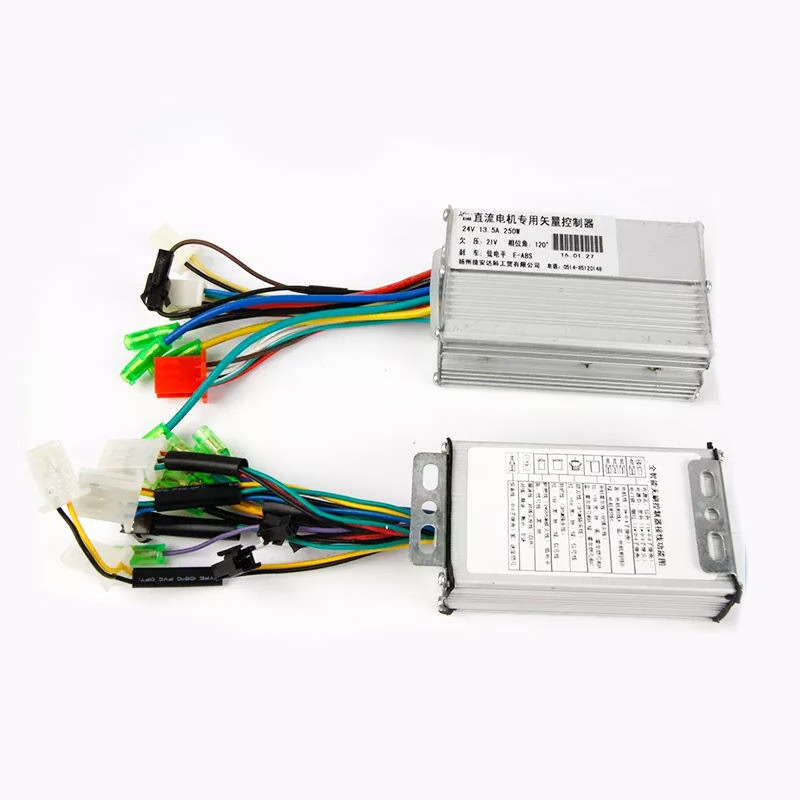
Controller Voltage and Power Matching
Controllers must be properly matched with the battery and motor system:
- 36V controllers: smoother, energy-efficient, suitable for city riding
- 48V controllers: stronger acceleration, better for fat tire or cargo bikes
- High-current controllers: required for 750W and above systems
Incorrect matching can reduce performance, shorten component lifespan, or cause system instability.
Smart Controllers and Connectivity
Modern e-bike controllers increasingly support smart features such as:
- Bluetooth or 4G IoT integration
- App-based parameter adjustment
- Ride data synchronization
- GPS tracking and geofencing
- Remote diagnostics and firmware updates
For fleet operators, delivery bikes, and shared mobility projects, smart controllers are becoming a key competitive advantage.
Reliability and After-Sales Importance
From an OEM and dealer perspective, controller quality directly impacts:
- Warranty claims
- Maintenance costs
- Customer satisfaction
- Brand reputation
A stable controller system with low failure rates is often more valuable than chasing the lowest component price.
This is why professional e-bike manufacturers focus on:
- Proven controller suppliers
- System-level testing
- Long-term component availability
- Local and overseas technical support
Why Controller Tuning Matters in OEM & ODM Projects
In ODM projects, the controller is where customization truly happens.
OEM manufacturers can adjust:
- Power curves
- Assist levels
- Speed limits
- Throttle response
- Regional compliance (EU / US regulations)
This allows brands to offer unique riding characteristics, even when using similar hardware.
Final Thoughts
The e-bike controller is far more than just an electronic box — it defines how an electric bicycle feels, performs, and lasts over time.
For dealers, brands, and fleet operators, choosing the right controller — and the right OEM partner — is critical to building reliable, differentiated, and profitable e-bike products.
If you’re developing custom e-bikes or evaluating OEM solutions, always look beyond motor and battery specs.
The controller is where performance truly comes together.

Leave a Reply