Opening
Launching an e-bike business in 2026 can be highly profitable, but only if it is approached with a realistic business plan rather than surface-level optimism. Over the past few years, I’ve seen many new distributors enter the market with strong enthusiasm but weak operational planning—especially around manufacturing, certification, and logistics. According to Statista, the global e-bike market reached $49.7 billion in 2024, and growth has continued steadily into 2026 as urban mobility and commercial fleet demand expand. The opportunity is real, but so are the risks for businesses that underestimate execution complexity.
This guide focuses on what actually matters when building a sustainable ebike business plan in today’s market.
Understanding the E-Bike Market in 2026
Market Demand Beyond Consumers
In 2026, e-bike demand will no longer be driven mainly by individual riders. From a distributor’s perspective, the strongest growth is coming from:
- Corporate and delivery fleets
- City mobility programs
- Regional retailers targeting commuter and utility models
Based on export data from the China Bicycle Association (CBIA), China shipped over 12 million e-bikes globally in 2024, and export volume has remained stable due to strong B2B demand rather than consumer trends alone¹.
From experience, distributors who focus only on “hot consumer models” often struggle with inventory turnover, while those aligned with utility-driven demand see more predictable revenue.
Profit Margin Reality
New entrants often assume margins will automatically be high. In practice:
- Typical distributor margins range from 18–25%
- Entry-level models carry volume but tighter margins
- Mid-range commuter e-bikes offer the best balance of margin and stability
What many first-time buyers overlook is how quickly margins shrink if certification delays or logistics costs are miscalculated.
Creating a Realistic Ebike Business Plan
Cost Breakdown That Actually Matters
A practical ebike business plan must go beyond product pricing. Real-world cost components include:
- Manufacturing cost (OEM or ODM)
- Certification and compliance
- Shipping and customs clearance
- Local warehousing
- After-sales service and spare parts
One common mistake I’ve seen is budgeting only for bikes, not for compliance. For example, UL certification for lithium battery systems typically costs $15,000–25,000 per model and takes 4–6 months, depending on test scope and revisions². Ignoring this upfront often delays market entry by half a year.
MOQ and Cash Flow Management
Most electric bicycle factories operate with MOQs between 50–200 units per model. Lower MOQs are possible but usually come with higher per-unit pricing.
From a cash-flow perspective, it’s usually safer to:
- Start with fewer SKUs
- Limit customization in early orders
- Reinvest profits rather than overstock inventory
Selecting the Right E-Bike Manufacturer
China vs. Vietnam: A Practical Comparison
Buyers often ask whether Vietnam can replace China as a manufacturing base. In theory, yes. In practice, not always.
- China offers a mature component ecosystem and faster issue resolution
- Vietnam may offer slightly lower labor costs but often faces longer lead times
Shipping data shows that container transport from Shenzhen to Los Angeles averages $1,800–2,200 with 18–22 days transit, while Vietnam routes often add 15–20% in cost due to port limitations³.
For new distributors, reliability usually matters more than marginal cost savings.
Factory Evaluation Beyond Sales Claims
When evaluating an ebike manufacturer, I always recommend focusing on:
- In-house battery assembly
- Quality control checkpoints
- Certification experience
- Production scalability
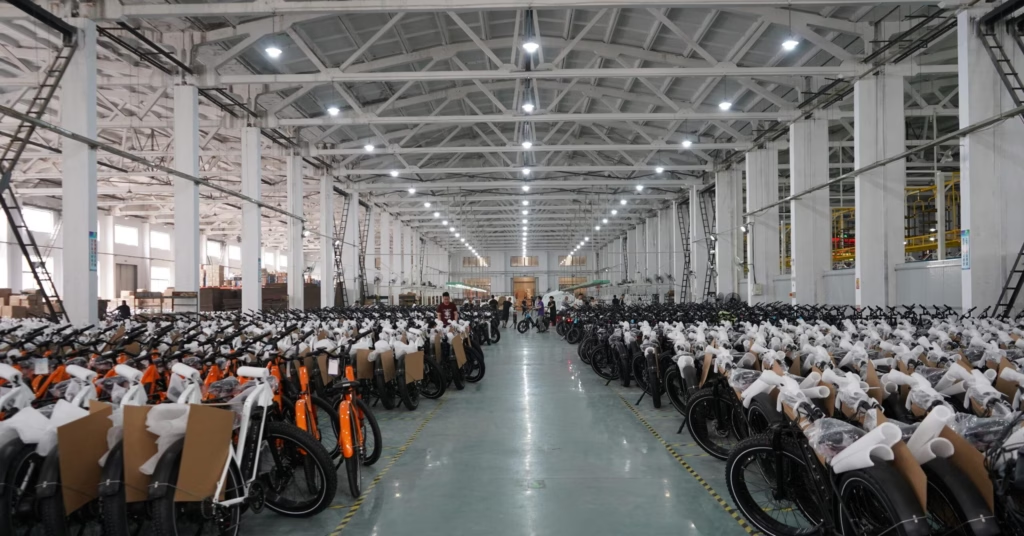
Visiting or reviewing documented factory operations can reveal far more than brochures. For example, manufacturers such as HAIDONG-Ebike provide visibility into their production processes, including battery testing and final assembly workflows, which helps distributors assess operational maturity rather than relying on marketing claims.
OEM vs ODM: Choosing the Right Model
OEM for Faster Market Entry
OEM partnerships are usually the best starting point for new distributors. They allow:
- Faster launch timelines
- Lower upfront cost
- Reduced certification complexity
In my experience, OEM is the safer option for the first 12–18 months.
ODM for Long-Term Differentiation
ODM makes sense only after market validation. While it offers brand differentiation, it also increases:
- Development timelines
- MOQ requirements
- Certification risk
Distributors who rush into ODM too early often face delays that offset any competitive advantage.
Certification and Compliance in 2026
Market-Specific Requirements
Compliance is non-negotiable and often underestimated:
- United States: UL 2849, FCC
- European Union: CE, EN 15194
- Canada: CSA
Working with manufacturers that already support these certifications can reduce time-to-market by 3–6 months. Established e-bike manufacturers with export experience often provide documentation frameworks and tested configurations, which significantly lowers compliance risk.
Logistics, Shipping, and Risk Control
Choosing the Right Shipping Model
Most distributors choose between:
- FOB for cost control
- DDP for operational simplicity
From experience, FOB works better once you understand logistics, while DDP is safer for first shipments.
Risk Reduction Strategies
To minimize risk:
- Use third-party inspections
- Avoid 100% prepayment
- Separate battery and bike shipments if required
Battery delays remain the most common cause of missed delivery schedules.
After-Sales Planning and Scalability
Warranty and Spare Parts
Successful distributors plan after-sales support early:
- Spare parts equal to 1–2% of order volume
- Clear warranty responsibility definitions
- Local service partners
Ignoring this stage often erodes margins within the first year.
Scaling the Business
Scaling depends on:
- Production consistency
- Supply chain stability
- Inventory planning accuracy
Factories capable of processing 50,000+ units per month provide pricing stability and component access that smaller facilities cannot match.
Conclusion
Starting an e-bike business in 2026 is less about excitement and more about disciplined execution. A strong ebike business plan grounded in realistic cost modeling, careful manufacturer selection, and regulatory readiness offers a far higher chance of long-term success. Based on industry experience, distributors who treat this as an operational business—not a trend-driven opportunity—are the ones who scale sustainably and protect margins over time.

Leave a Reply